Originally a throwaway game included in the compilation package The Orange Box (featuring Half-Life 2, two expansion packs for it, and Team Fortress 2), Portal was the breakout hit of 2007. Not content with raking in critical acclaim in the form of multiple awards—including Game of the Year and Best Game Design from the Game Developers Choice Awards—it also gathered mass popular appeal in the form of internet memes, official merchandise and fan-made crafts. The source of all this acclaim? A simple, yet ingenious design, an engaging premise, a darkly funny script, and what is quite probably the best song ever played over ending credits.
You play as Chell, a young woman who wakes from stasis in the Aperture Science Enrichment Center and is instructed to test the Handheld Portal Device, a gun that shoots controlled wormholes to connect two points in space. Instructions are given via the AI, GLaDOS, a calm female voice that promises cake as it leads you through rooms filled with jets of fire, oddly polite gun turrets, and other hazards. After a point you start finding out what's behind the scenes and things only get darker—and funnier—from there.
Images:
Chell, chasing herself through walls
Your best friend in the place, the Weighted Companion Cube
Carrying a turret around, so it won't shoot
M. C. Escher would love this
GLaDOS, herself
Game trailer
Monday, June 2, 2008


Tuesday, April 15, 2008
Chrono Cross
The sequel to Chrono Trigger was long and eagerly awaited, until Chrono Cross was finally released in 1999 (2000 in North America). As a sequel it was less than ideal, as there are no familiar characters, locations, or anything, and the connection to Trigger is not revealed until very near the end of the game. However, on its own merits, Chrono Cross is an innovative, elaborate, and lovely game. Retaining the lack of random battles from the previous game, it further abandons traditional leveling, instead adding to your abilities in a "star" form as you progress through plot points, as well as a stamina system that gives you more opportunities for action during battles. Most notable are the massive forty-five member cast of playable characters and the eleven different endings, offering very flexible replay with all the possible combinations.
Serge would have been content to live his life in his small fishing village, marrying his girlfriend Leena, and generally never experiencing the world at large. Unfortunately, Fate has a different plan, and poor Serge is sent to an alternate reality in which he died as a child. His family is gone and his friends don't recognize him, but someone apparently does, as soldiers show up to capture him at his own grave. He fights them off with the help of a young thief named Kid and is quickly pulled into her search for the most valuable artifact in the world: the Frozen Flame. A war between nations, the struggle of humans versus demi-humans, and the six Dragon Gods against the destructive impulses of mankind all follow while Serge simply tries to figure out what's happened and how he can get home again. Pursued by Lynx—also after the Frozen Flame, among other things—and alternately helped and hindered by Lynx's companion, Harle, Serge finds out a lot more than he bargained for as to why he's alive and in this reality. It's not pretty, but that's what friends are for, right?
Images:
Serge
Kid
Lynx
Harle
The Frozen Flame
Serge in action
Opening movie
Serge would have been content to live his life in his small fishing village, marrying his girlfriend Leena, and generally never experiencing the world at large. Unfortunately, Fate has a different plan, and poor Serge is sent to an alternate reality in which he died as a child. His family is gone and his friends don't recognize him, but someone apparently does, as soldiers show up to capture him at his own grave. He fights them off with the help of a young thief named Kid and is quickly pulled into her search for the most valuable artifact in the world: the Frozen Flame. A war between nations, the struggle of humans versus demi-humans, and the six Dragon Gods against the destructive impulses of mankind all follow while Serge simply tries to figure out what's happened and how he can get home again. Pursued by Lynx—also after the Frozen Flame, among other things—and alternately helped and hindered by Lynx's companion, Harle, Serge finds out a lot more than he bargained for as to why he's alive and in this reality. It's not pretty, but that's what friends are for, right?
Images:
Serge
Kid
Lynx
Harle
The Frozen Flame
Serge in action
Opening movie
Monday, April 7, 2008
Chrono Trigger
1995 saw the release of a game created by a dream team consisting, among others, of such artists as Hironobu Sakaguchi—the creator of Final Fantasy—Akira Toriyama—the creator of Dragonball—and renowned composer Nobuo Uematsu. It was based on the standard RPG format of the time, but featured several innovations including a lack of random battles, over a dozen possible endings, and extensive, character-building sidequests. Graphics that were lovely for the time remained the same for the Playstation reissue (2001 in North America) but several anime sequences were added, regardless. Fun gameplay, an interesting plot with multiple variants, and the option to recruit a villain as a playable character are just some of the reasons that Chrono Trigger is consistently judged one of the best games of all time.
When Crono bumped into a girl at the Millenial Fair, he certainly didn't expect to end up travelling through time in an effort to stop a global catastrophe. Still, when Marle—the girl in question—vanishes into a strange portal while trying out a prototype teleportation device invented by Crono's friend Lucca, he doesn't hesitate to step in after her. It's the first step in a trip through human history, a massive war of humans versus the Mystics, and the gradual awareness of a parasitic creature that will destroy civilization if Crono and his friends can't stop it.
Images:
The good guys, of all shapes and eras
The Mystics
The showdown with Magus
The ultimate enemy is... a hedgehog?
Opening movie for the PSX
When Crono bumped into a girl at the Millenial Fair, he certainly didn't expect to end up travelling through time in an effort to stop a global catastrophe. Still, when Marle—the girl in question—vanishes into a strange portal while trying out a prototype teleportation device invented by Crono's friend Lucca, he doesn't hesitate to step in after her. It's the first step in a trip through human history, a massive war of humans versus the Mystics, and the gradual awareness of a parasitic creature that will destroy civilization if Crono and his friends can't stop it.
Images:
The good guys, of all shapes and eras
The Mystics
The showdown with Magus
The ultimate enemy is... a hedgehog?
Opening movie for the PSX
Tuesday, March 25, 2008
Final Fantasy VII: Crisis Core
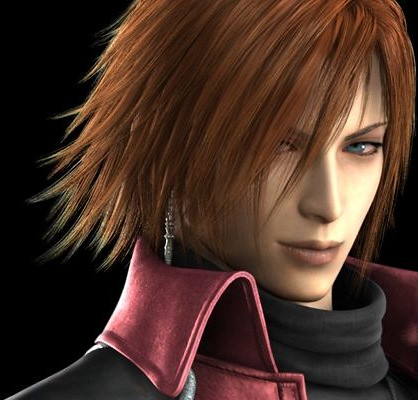
Today, 3/25/08, marks the US release of the long-anticipated prequel to Final Fantasy VII. Crisis Core, while PSP-specific, sports amazing graphics and a fantastic soundtrack, as well as quality voice acting and, quite frankly, the best spin-off of the wildly popular original game. Gathering both critical acclaim and popular appeal, FFVII:CC is a milestone in the franchise. As a prequel, it covers the seven years prior to FFVII leading right up to the moments almost immediately before the start of that game. Featuring characters known to FFVII fans that have not previously been given much face time, this is a game both comforting to old hands and accessible to new players, although only the latter will be surprised at the inevitable tragedy.
Zack Fair is a SOLDIER 2nd Class with a burning desire to prove himself. With the guidance of his friend and mentor Angeal, Zack works his way through the war in Wutai and up the ranks. Their relationship takes a hit, though, when they are sent to retrieve a SOLDIER gone AWOL: Genesis, longtime friend of both Angeal and Sephiroth. The genetic experimentation that is revealed in the search will have lasting implications, and also immediate, devestating impact.
Images:
Zack
Angeal
Genesis
Sephiroth
Three friends at play
In-game combat
A familiar scene
A familiar face
The only time you've ever seen Cloud smile
Game trailer
Zack Fair is a SOLDIER 2nd Class with a burning desire to prove himself. With the guidance of his friend and mentor Angeal, Zack works his way through the war in Wutai and up the ranks. Their relationship takes a hit, though, when they are sent to retrieve a SOLDIER gone AWOL: Genesis, longtime friend of both Angeal and Sephiroth. The genetic experimentation that is revealed in the search will have lasting implications, and also immediate, devestating impact.
Images:
Zack
Angeal
Genesis
Sephiroth
Three friends at play
In-game combat
A familiar scene
A familiar face
The only time you've ever seen Cloud smile
Game trailer
Tuesday, March 11, 2008
Ratchet & Clank: Up Your Arsenal
Building on the successful model of the first two, the third R&C in 2004 merely changed around a few weapons and added in a multiplayer mode, both on- and offline. The graphics were a little cleaner, the maps a little larger, but for the most part the winning formula remained the same.
When Ratchet hears that his home planet of Veldin is under attack he rushes back to help with the defense. After being mistaken for a new sergeant by the Galactic Rangers and helping to clear out the initial attack it's revealed that it's been organized by an old enemy of Captain Qwark: Dr. Nefarious. Clank, having been confused with his TV personality, is recruited by the Galactic President to find Qwark so they can figure out how to defeat Nefarious at long last. Since Nefarious is threatening to turn all biological life into robots, though, Clank's loyalty comes into question. Could this be the end of the Lombax/robot team?
Images:
Ratchet & Clank
Secret Agent Clank!
Dr. Nefarious
Courtney Gears has a thing for Clank
Four-person, offline, multiplayer mode
Who doesn't love a Plasma Whip?
Opening movie
When Ratchet hears that his home planet of Veldin is under attack he rushes back to help with the defense. After being mistaken for a new sergeant by the Galactic Rangers and helping to clear out the initial attack it's revealed that it's been organized by an old enemy of Captain Qwark: Dr. Nefarious. Clank, having been confused with his TV personality, is recruited by the Galactic President to find Qwark so they can figure out how to defeat Nefarious at long last. Since Nefarious is threatening to turn all biological life into robots, though, Clank's loyalty comes into question. Could this be the end of the Lombax/robot team?
Images:
Ratchet & Clank
Secret Agent Clank!
Dr. Nefarious
Courtney Gears has a thing for Clank
Four-person, offline, multiplayer mode
Who doesn't love a Plasma Whip?
Opening movie
Monday, March 3, 2008
Ratchet & Clank: Going Commando
Returning in 2003 with new weapons and gadgets, improved game mechanics, and a more likable hero, Going Commando was a solid and very popular entry in the ongoing Ratchet & Clank series. While the game was easily accessible to a new player, a fun feature was the free acquisition of classic weapons with the presence of a save file from the first game. Also nice was the fact that you didn't have to retread the same ground, as is so often the case in series games: items like Clank's upgrades and Ratchet's grind boots did not need to be reacquired. The best addition, though, is probably the upgradable weapons. The more they're used, the better they work, holding more ammunition and dealing more damage. Once again, the weapons range from the silly (the Sheepinator, which is exactly what it sounds like) to the deadly serious (the Zodiac, which will take out any- and everything visible on the screen in one hit) and everything in between.
Everything is pretty anti-climactic after saving a galaxy, but while Clank's content living a quiet life, Ratchet's hungry for more adventure. That's why when Abercrombie Fizzwidget, CEO of Megacorp in the neighboring galaxy, offers a job recovering a stolen experiment, Ratchet's only too eager to accept. Things heat up when Clank is unwillingly dragged into the mess, but it's just the beginning. Between a mystery thief, Thugs-4-Less rental goons, and a furry problem of gargantuan size, Ratchet and Clank have their hands full, but when an old enemy rears his head, it gets difficult for Ratchet to keep his.
Images:
Ratchet shows off his shiny new Plasma Coil
Clank leads a small army of robot slaves
Fizzwidget shows off his new experiment
The shadowy thief
Sheepinator aftermath
Who couldn't use a mini-nuke?
Trailer
Everything is pretty anti-climactic after saving a galaxy, but while Clank's content living a quiet life, Ratchet's hungry for more adventure. That's why when Abercrombie Fizzwidget, CEO of Megacorp in the neighboring galaxy, offers a job recovering a stolen experiment, Ratchet's only too eager to accept. Things heat up when Clank is unwillingly dragged into the mess, but it's just the beginning. Between a mystery thief, Thugs-4-Less rental goons, and a furry problem of gargantuan size, Ratchet and Clank have their hands full, but when an old enemy rears his head, it gets difficult for Ratchet to keep his.
Images:
Ratchet shows off his shiny new Plasma Coil
Clank leads a small army of robot slaves
Fizzwidget shows off his new experiment
The shadowy thief
Sheepinator aftermath
Who couldn't use a mini-nuke?
Trailer
Thursday, February 28, 2008
Ratchet & Clank
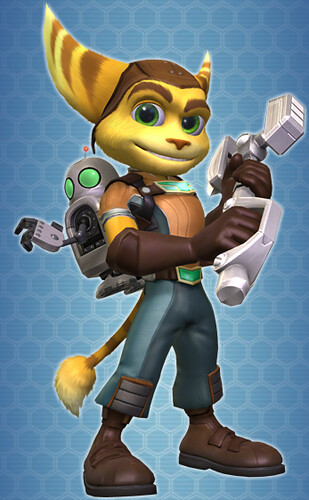
When Insomniac produced a game intended to rival Naughty Dog's Jak and Daxter, they had no idea that 2002's Ratchet & Clank would eventually outstrip the competition in popularity. Built on the same engine, the two titles have a similar feeling in gameplay, and even possess much of the same tongue-in-cheek humor, but the astounding arsenal of weapons caught public interest, from the sheer silliness of the Morph-o-Ray to the overpowering destruction of the R.Y.N.O. (Rip Ya a New One), and planted the seeds of desire for further comic destruction in the future.
Fresh from the factory, a tiny robot stumbles over plans of galactic destruction and runs off to enlist the help of the biggest superhero around, Captain Qwark. Instead, he finds Ratchet: a self-centered Lombax handy with a wrench and eager to get away from his home planet. The newly-dubbed Clank is willing to take whatever help he can find, so the two of them join up in order to find Qwark and stop Chairman Drek of the Blarg from destroying planets while building a new one to replace his own polluted world.
Images:
Ratchet and Clank
Qwarktastic!
Chairman Drek
The Morph-o-Ray in action, making chicken dinners fun
Sometimes, you just need a decoy
Gameplay that runs you right up the wall
Opening movies
Fresh from the factory, a tiny robot stumbles over plans of galactic destruction and runs off to enlist the help of the biggest superhero around, Captain Qwark. Instead, he finds Ratchet: a self-centered Lombax handy with a wrench and eager to get away from his home planet. The newly-dubbed Clank is willing to take whatever help he can find, so the two of them join up in order to find Qwark and stop Chairman Drek of the Blarg from destroying planets while building a new one to replace his own polluted world.
Images:
Ratchet and Clank
Qwarktastic!
Chairman Drek
The Morph-o-Ray in action, making chicken dinners fun
Sometimes, you just need a decoy
Gameplay that runs you right up the wall
Opening movies
Tuesday, February 19, 2008
Daxter
It took awhile, but in 2006 the perennial second thought branched out into his own game, appropriately enough on a handheld console. Reverting to something closer to the original feel of Jak and Daxter, the sidekick's solo adventure covers the time missing from Jak II, and the main storyline is interspersed with dream sequences parodying popular movies, such as The Matrix and Raiders of the Lost Ark.
It's been nearly two years since Daxter saw his best buddy Jak get dragged off by the Krimzon Guard, and he's had absolutely no luck in turning up so much as a single greeny-blond hair. That doesn't stop him from relating wild tales of his adventures to disbelieving audiences, however. When Osmo of the Kritter Ridder Extermination Company overhears, he offers Daxter a job in his business. Armed with an oversized, electric flyswatter and a backpack of bug spray, Daxter takes on the legions of Metal Head insects infiltrating Haven City and, along the way, stumbles over his missing friend.
Images:
He's short, he's fuzzy, he's armed and dangerous
This could be a problem
Those are some big bugs...
...but that's a big bug swatter
Intro movie
It's been nearly two years since Daxter saw his best buddy Jak get dragged off by the Krimzon Guard, and he's had absolutely no luck in turning up so much as a single greeny-blond hair. That doesn't stop him from relating wild tales of his adventures to disbelieving audiences, however. When Osmo of the Kritter Ridder Extermination Company overhears, he offers Daxter a job in his business. Armed with an oversized, electric flyswatter and a backpack of bug spray, Daxter takes on the legions of Metal Head insects infiltrating Haven City and, along the way, stumbles over his missing friend.
Images:
He's short, he's fuzzy, he's armed and dangerous
This could be a problem
Those are some big bugs...
...but that's a big bug swatter
Intro movie
Monday, February 11, 2008
Jak X: Combat Racing
Throwing the numbering system into Arbitraryland, 2005's Jak X also discards a number of other things from the previous games, i.e. everything but the racing aspect of 3. Still, the game makes no bones about what it is: a minigame gone big time. As such, it's perfectly serviceable, and a welcome continuation for those craving more Jak stories.
Jak and compatriates are invited to Kras City for the reading of a will. Krew (see Jak II) has invited a number of his former employees and contacts to join his daughter for a celebratory drink in Krew's honor. Unfortunately, the wine is poisoned and the only way to get the antidote is to win the Kras City Racing Championship. Their lives may be on the line, but the competition won't take anything lying down, as the control of the city's crime syndicate is also up for grabs. Facing off against the shadowy, never-seen crime lord Mizo, his top racer Razer, and constantly in the public eye courtesy of television personality G. T. Blitz, Jak and co. will need more than luck to pull through.
Images:
The requisite new 'do
The slimeball's lovely daughter
Razer can be intimidating...
... but G. T. Blitz is always annoying
Just another day at the races
Opening movie
Jak and compatriates are invited to Kras City for the reading of a will. Krew (see Jak II) has invited a number of his former employees and contacts to join his daughter for a celebratory drink in Krew's honor. Unfortunately, the wine is poisoned and the only way to get the antidote is to win the Kras City Racing Championship. Their lives may be on the line, but the competition won't take anything lying down, as the control of the city's crime syndicate is also up for grabs. Facing off against the shadowy, never-seen crime lord Mizo, his top racer Razer, and constantly in the public eye courtesy of television personality G. T. Blitz, Jak and co. will need more than luck to pull through.
Images:
The requisite new 'do
The slimeball's lovely daughter
Razer can be intimidating...
... but G. T. Blitz is always annoying
Just another day at the races
Opening movie
Monday, February 4, 2008
Jak 3
Increasingly idiosyncratic in its naming conventions, 2004's Jak 3 is the "final" game in the series, despite having two more titles come out after it. Perhaps realizing that the doom and gloom approach of II was a bit heavy-handed, publisher Naughty Dog went back to a slightly more carefree overall feel, which is a bit odd considering the lingering darkness of plot. With an even heavier emphasis on racing than previous installments—this time with four-wheeled vehicles rather than the motorcycle-like zoomers—and a change in voice acting that relegated designated love interest Keira to little more than a cameo role, 3 alienated a number of fans, although the gameplay as a whole was a little more manageable and the over-arching story is brought to a conclusion of sorts. The locations in particular brought a nice balance back to the games, alternating between a vast desert and a scaled-down version of the city from II, harkening back to the open spaces of the first game while embracing the challenge of the second.
Jak may have defeated the metalhead leader and saved Haven from destruction, but the populace—carefully lead by the scheming Count Veger—doesn't trust him and, after a new attack, Jak is held responsible and exiled to the Wasteland. Picked up by Damas, king of Spargus—a city of exiles and an oasis in the harsh desert—and embittered by the betrayal of his adopted home, Jak sets about building a new life for himself and his faithful friend Daxter. In between proving himself to Damas, dealing with the outright hostility of the local monks, and deciding whether he should answer Ashelin and Torn's call to help Haven again, Jak also picks up some new light eco abilities and finds out just why his friend Sig was haunting Haven in the first place. The answer will end up changing Jak's life forever.
Images:
Jak and Daxter, v. 3.0
Dark Jak is still alive and kicking
And Light Jak joins the party
Veger supervises Jak's exile
Damas and Jak enjoy a heart to heart
Ashelin asks for help
Torn is pleased to see Jak again
All in a day's work
A leisurely desert cruise
Game intro movie
Jak may have defeated the metalhead leader and saved Haven from destruction, but the populace—carefully lead by the scheming Count Veger—doesn't trust him and, after a new attack, Jak is held responsible and exiled to the Wasteland. Picked up by Damas, king of Spargus—a city of exiles and an oasis in the harsh desert—and embittered by the betrayal of his adopted home, Jak sets about building a new life for himself and his faithful friend Daxter. In between proving himself to Damas, dealing with the outright hostility of the local monks, and deciding whether he should answer Ashelin and Torn's call to help Haven again, Jak also picks up some new light eco abilities and finds out just why his friend Sig was haunting Haven in the first place. The answer will end up changing Jak's life forever.
Images:
Jak and Daxter, v. 3.0
Dark Jak is still alive and kicking
And Light Jak joins the party
Veger supervises Jak's exile
Damas and Jak enjoy a heart to heart
Ashelin asks for help
Torn is pleased to see Jak again
All in a day's work
A leisurely desert cruise
Game intro movie
Monday, January 28, 2008
Jak II
Jak and Daxter may have been a light-hearted game, but 2004's Jak II turned the brightness down by a spectacular amount. The bright, pastoral openness of the first game is hedged into an enormous but dark, dirty, run-down city. The platform aspects remain the same, but the addition of a variety of guns add shooter to the genre list. More than the appearance darkens in this game, as the bright-eyed, silent Jak of the original gains a voice and turns anti-hero, with a predilection for hijacking vehicles and mowing down pedestrians caught in the crossfire. The darkness is also an indicator of depth, however, as the plot is more intricate and the characters more detailed than before.
When the investigation of a Precursor relic on the behalf of Samos and Keira goes amiss, Jak and Daxter find themselves alone in a strange city, but not for long: Jak is captured by the Krimzon Guard while Daxter runs off, promising to rescue his friend in no time. Two years later, Jak's a prisoner, undergoing near-constant torture and infusions of dark eco. Daxter finds him in the nick of time, as Baron Praxis, the ruler of the city, issues the order to have Jak killed off that night. Jak utters his first words before transforming into a uncontrollable monster and only barely changes back before killing his best friend. Thus begins an effort to get revenge on Praxis, whether it be joining Torn and the Underground to overthrow the Baron or working as hired muscle for Krew, the city's biggest mobster. Throw in the fact that the city itself is under assault by Metalheads, the true heir needs protecting, Keira and Samos are still missing, and the captain of the KG has a burning desire for Jak's head on a plate, the Demolition Duo have their work cut out for them.
Images:
J&D, the new look
Tall, dark, and gruesome
Erol, KG captain and Praxis' right hand man
Jak is a little too pleased with his new weapon
Torn is less pleased with newcomers
Ashelin, KG spy, is also a tad suspicious
Krew may be scum, but he's powerful scum
Sig, Krew's main enforcer, is surprisingly decent, though
Things may be bleak, but there's always time to relax
Game opening movie
When the investigation of a Precursor relic on the behalf of Samos and Keira goes amiss, Jak and Daxter find themselves alone in a strange city, but not for long: Jak is captured by the Krimzon Guard while Daxter runs off, promising to rescue his friend in no time. Two years later, Jak's a prisoner, undergoing near-constant torture and infusions of dark eco. Daxter finds him in the nick of time, as Baron Praxis, the ruler of the city, issues the order to have Jak killed off that night. Jak utters his first words before transforming into a uncontrollable monster and only barely changes back before killing his best friend. Thus begins an effort to get revenge on Praxis, whether it be joining Torn and the Underground to overthrow the Baron or working as hired muscle for Krew, the city's biggest mobster. Throw in the fact that the city itself is under assault by Metalheads, the true heir needs protecting, Keira and Samos are still missing, and the captain of the KG has a burning desire for Jak's head on a plate, the Demolition Duo have their work cut out for them.
Images:
J&D, the new look
Tall, dark, and gruesome
Erol, KG captain and Praxis' right hand man
Jak is a little too pleased with his new weapon
Torn is less pleased with newcomers
Ashelin, KG spy, is also a tad suspicious
Krew may be scum, but he's powerful scum
Sig, Krew's main enforcer, is surprisingly decent, though
Things may be bleak, but there's always time to relax
Game opening movie
Thursday, January 24, 2008
Jak and Daxter: The Precursor Legacy
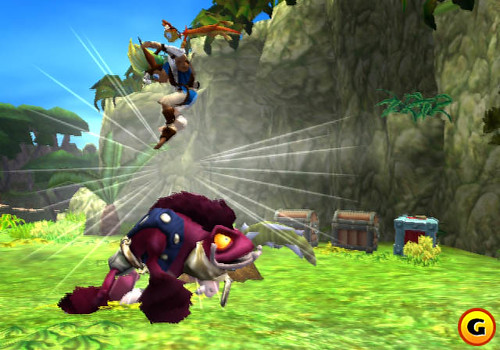
Seamless loading of a massive map is the major hallmark of this 2001 release. In most respects a fairly typical platformer, with a set amount of health that never increases, the only "power-ups" being new colors of eco (an energy source with different effects depending on the type), and some driving sequences, Jak and Daxter still garnered overwhelmingly positive reviews. While there was nothing especially innovative in the gameplay, story, or characters, the classic elements of a silent protagonist, obnoxious sidekick, and standard jumping and collecting puzzles merged together to create a wonderful, light-hearted, and fantastically fun game.
The ever-silent Jak and his best friend, Daxter, have disobeyed orders—as teenagers tend to do—and gone out to Misty Island. After witnessing a gathering of Lurkers and being attacked by a guard, Daxter is knocked into a pool of dark eco and transformed into a little orange critter dubbed an ottsel (half otter, half weasel). Samos, the Green Sage, tells them that they must travel across the continent to the Dark Sage in order to have Daxter's condition reversed. Trouble is, there's an awful lot of Lurkers between their village and the Dark Sage...
Images:
The titular duo
Samos, pontificating at length
Keira: Samos' daughter and mechanic extraordinaire
Hanging around the seaside
Spinning through the jungle
Fighting a Lurker
A little dance of victory
The game trailer
The ever-silent Jak and his best friend, Daxter, have disobeyed orders—as teenagers tend to do—and gone out to Misty Island. After witnessing a gathering of Lurkers and being attacked by a guard, Daxter is knocked into a pool of dark eco and transformed into a little orange critter dubbed an ottsel (half otter, half weasel). Samos, the Green Sage, tells them that they must travel across the continent to the Dark Sage in order to have Daxter's condition reversed. Trouble is, there's an awful lot of Lurkers between their village and the Dark Sage...
Images:
The titular duo
Samos, pontificating at length
Keira: Samos' daughter and mechanic extraordinaire
Hanging around the seaside
Spinning through the jungle
Fighting a Lurker
A little dance of victory
The game trailer
Monday, January 7, 2008
Xenosaga
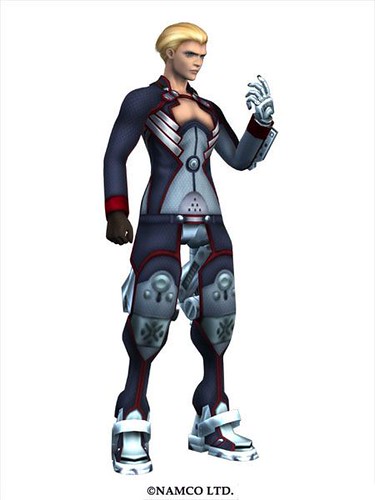
This massive, three-part game (Der Wille zur Macht, 2003; Jenseits von Gut und Böse, 2005; Also sprach Zarathustra, 2006—North American release dates) bears a number of similarities to its spiritual predecessor, Xenogears. Although many of the creators were the same, the company changed, and so the concepts were revisited in a new light without directly connecting the two. The changes continued in the saga, however, as any number of people involved in the creation changed from episode to episode, resulting in occasionally inconsistant character design and some fogginess of overall plot. The conversion from Japan to North America also brought changes in some of the scenes: censored for blood or violence in order to reduce the rating. Also prone to change were the voice actors, resulting in at least one character going from a light tenor to a mellow baritone. Retaining from Xenogears the themes of gnosticism, philosophy, and psychology, Xenosaga heavily references Nietzsche and Jung in everything from the game titles to character names. Much like Xenogears, Xenosaga features long cinematic scenes that occasionally interfere with the feeling of gameplay, but fans tend to overlook the flaws in favor of the incredibly complex story and character relationships. Fortunately, there's an in-game database to help keep people, places, events, and terminology straight. It's a testament to the intricacies of the games that the database is necessary.
Major characters
Shion Uzuki: Lead developer for Vector Industries on project KOS-MOS, a brilliant young woman. I II III
Jin Uzuki: Shion's estranged elder brother. A gifted swordsman, but aimless in life. Professions have included medical doctor and bookstore owner. IIa IIb III
KOS-MOS: An experimental battle android with a fierce loyalty to Shion that trancends her programming. I II III
chaos: A mysterious young man with a gentle disposition that belies his abilities. I IIa IIb III
Jr.: Apparently a boy of about twelve, captain of one of the galaxy's most powerful battleships, and evident successor to the prestigious Kukai Foundation. I II III
MOMO: A prototype Realian—an artificial human—in the form of a young girl. I II III
Ziggy: Zigguraut 8, a cyborg charged with MOMO's protection. His price for taking the mission was to be allowed to die. I II III
Margulis: A fierce opponent and swordsman on par with Jin. They have a shared history.
Albedo: A white-haired, virtually immortal psychopath with a fixation on Jr.
Gaignun Kukai: The titular head of the Kukai Foundation. His relationship to Jr. is not immediately apparent, although the similarity of appearance is marked.
Broken down by individual game, all beyond the first entry will contain spoilers for the previous installments:
Xenosaga Episode I: Der Wille zur Macht
Sometime this century, an archeological expedition in Kenya uncovers a golden monolith known as a Zohar, with catastrophic effect. Fast forward a few millenia, to where humans populate over 500,000 planets, but no one knows the location of their original home, now known as Lost Jerusalem.
About fourteen years previously, Shion's home planet of Miltia was ravaged by malfunctioning combat Realians and lost in space-time following the emergence of the Gnosis—extra-dimensional creatures with the ability to crystalize organic life on contact. KOS-MOS is designed to combat Gnosis, but she's untested and unable to repel the attack on their ship which happened to be transporting a Zohar. Shion, KOS-MOS, and a couple of others are the only survivors, picked up by a salvage ship owned by the Kukai Foundation, of which chaos—retained for his ability to dissolve Gnosis with a touch—is a crew member. Along the way they pick up Ziggy and MOMO, the latter having been rescued from Margulis and wanted for the data encoded in her. When Jr.'s battleship is framed for the destruction of Shion's transport in an effort to claim MOMO, they must all work together to get themselves in the clear. Pursued and opposed by any number of factions that want possession of both the Zohar and MOMO, this is, to say the least, no simple task.
Xenosaga Episode II: Jenseits von Gut und Böse
Continuing immediately after the events of the first game, this episode features largely around Jr.'s history. Jin Uzuki is introduced in the beginning in a flashback of the destruction of Miltia, where he meets chaos (physically the same as he is fourteen years later) and a Realian named Canaan, who are trying to find the source of the planet's troubles. Jin manages to give Margulis his distinctive scar at this point, Canaan stores encoded information in his brain until it can be extracted later, and they stumble over and rescue a couple of injured boys: Nigredo and Rubedo, A.K.A. Gaignun Kukai and Jr. In the present time, familial discord abounds as Rubedo and Albedo fight each other over the information still locked inside MOMO, Shion holds Jin to blame for the death of their parents, and chaos is revealed to have a connection to one of the galaxy's major players.
Xenosaga Episode III: Also sprach Zarathustra
A year after the death of Albedo, Shion has left Vector and is working with an underground group of saboteurs known as Scientia. While looking for information about her father's possible involvement in the destruction of Miltia she's called upon by old friends. A section of Lost Jerusalem has appeared, floating in space, but was pulled into an anomaly along with the ship that rescued Shion the previous year. In an effort to save them, Shion and the others finally discover the whole truth behind the destruction of Miltia, the existance of the Gnosis, and the path of destruction that humanity has been nudged along for thousands of years.
Major characters
Shion Uzuki: Lead developer for Vector Industries on project KOS-MOS, a brilliant young woman. I II III
Jin Uzuki: Shion's estranged elder brother. A gifted swordsman, but aimless in life. Professions have included medical doctor and bookstore owner. IIa IIb III
KOS-MOS: An experimental battle android with a fierce loyalty to Shion that trancends her programming. I II III
chaos: A mysterious young man with a gentle disposition that belies his abilities. I IIa IIb III
Jr.: Apparently a boy of about twelve, captain of one of the galaxy's most powerful battleships, and evident successor to the prestigious Kukai Foundation. I II III
MOMO: A prototype Realian—an artificial human—in the form of a young girl. I II III
Ziggy: Zigguraut 8, a cyborg charged with MOMO's protection. His price for taking the mission was to be allowed to die. I II III
Margulis: A fierce opponent and swordsman on par with Jin. They have a shared history.
Albedo: A white-haired, virtually immortal psychopath with a fixation on Jr.
Gaignun Kukai: The titular head of the Kukai Foundation. His relationship to Jr. is not immediately apparent, although the similarity of appearance is marked.
Broken down by individual game, all beyond the first entry will contain spoilers for the previous installments:
Xenosaga Episode I: Der Wille zur Macht
Sometime this century, an archeological expedition in Kenya uncovers a golden monolith known as a Zohar, with catastrophic effect. Fast forward a few millenia, to where humans populate over 500,000 planets, but no one knows the location of their original home, now known as Lost Jerusalem.
About fourteen years previously, Shion's home planet of Miltia was ravaged by malfunctioning combat Realians and lost in space-time following the emergence of the Gnosis—extra-dimensional creatures with the ability to crystalize organic life on contact. KOS-MOS is designed to combat Gnosis, but she's untested and unable to repel the attack on their ship which happened to be transporting a Zohar. Shion, KOS-MOS, and a couple of others are the only survivors, picked up by a salvage ship owned by the Kukai Foundation, of which chaos—retained for his ability to dissolve Gnosis with a touch—is a crew member. Along the way they pick up Ziggy and MOMO, the latter having been rescued from Margulis and wanted for the data encoded in her. When Jr.'s battleship is framed for the destruction of Shion's transport in an effort to claim MOMO, they must all work together to get themselves in the clear. Pursued and opposed by any number of factions that want possession of both the Zohar and MOMO, this is, to say the least, no simple task.
Xenosaga Episode II: Jenseits von Gut und Böse
Continuing immediately after the events of the first game, this episode features largely around Jr.'s history. Jin Uzuki is introduced in the beginning in a flashback of the destruction of Miltia, where he meets chaos (physically the same as he is fourteen years later) and a Realian named Canaan, who are trying to find the source of the planet's troubles. Jin manages to give Margulis his distinctive scar at this point, Canaan stores encoded information in his brain until it can be extracted later, and they stumble over and rescue a couple of injured boys: Nigredo and Rubedo, A.K.A. Gaignun Kukai and Jr. In the present time, familial discord abounds as Rubedo and Albedo fight each other over the information still locked inside MOMO, Shion holds Jin to blame for the death of their parents, and chaos is revealed to have a connection to one of the galaxy's major players.
Xenosaga Episode III: Also sprach Zarathustra
A year after the death of Albedo, Shion has left Vector and is working with an underground group of saboteurs known as Scientia. While looking for information about her father's possible involvement in the destruction of Miltia she's called upon by old friends. A section of Lost Jerusalem has appeared, floating in space, but was pulled into an anomaly along with the ship that rescued Shion the previous year. In an effort to save them, Shion and the others finally discover the whole truth behind the destruction of Miltia, the existance of the Gnosis, and the path of destruction that humanity has been nudged along for thousands of years.
Thursday, January 3, 2008
Xenogears
Philosophical, psychological, and religious themes pervade 1998's Xenogears, enough so that a decade later the intricacies and overall meaning of the game are still hotly debated. On the surface it's a confusing mesh of destruction, hatred, and giant robots. Underneath that is a confusing mesh of love, death, betrayal, psychosis, self-determination, and 10,000 years of machinations and plotting. The game mechanics are subject to debate, as the innovative mix of semi-turn-based battle and combination attacks are juxtaposed against the unlikely addition of platforming elements, leading to some extremely unusual jumping puzzles prone to interruption in mid-leap by random battle. Equally subject to debate are the long cutscenes, some lasting upwards of twenty minutes at a time. While the story unfolds and the characters are explored, it can be quite frustrating to play for five minutes, watch ten minutes, play ten seconds, watch fifteen minutes, play thirty minutes, watch twenty minutes, etc. Also of concern to some is the disparity of graphics, with less than stellar in-game animation occasionally being supplanted by hand-drawn anime sequences. Regardless of how they may fall on these minor issues, fans of the game universally applaud the twisted depths of the story, with references ranging from Gnosticism to Soylent Green and the vagaries of Dissociative Identity Disorder and Freudian psychology.
The nations of Aveh and Kislev have been at war for time beyond memory. Kislev had developed an edge until the appearance of a new fighting force, Gebler, put Aveh back on top. The war literally drops into the middle of a quiet border town and the resulting destruction forces Fei—a young man with no memories prior to three years previous when he was taken into the village with severe injuries—to depart for the world at large on the advice of his friend and town doctor, Citan. Fei meets Elly, a Gebler soldier, for the first time in a series of life-changing meetings before falling in with Bart, the deposed heir of Aveh. Reluctantly joining Bart's insurrection, Fei is gradually exposed to the contrived forces behind the war, the feuding religious sects of the Ethos and Nisan, thousands of years of history that had been deliberately buried, and a handful of strange people who alternately want to make him stronger, empower his enemies, or just kill him for existing. The matter of warring nations falls by the wayside as it becomes apparent that the issue at hand is the survival of the human race.
Images:
Your first glimpse of Fei
The improbably-haired Fei against the backdrop of his burning town
Meeting Elly
A recurring image
Bartholomew Fatima (Bart)
Left to right: Bart, Citan, Fei, and Billy—an Ethos warrior priest
The Nisan cathedral
Grahf, who has a habit of empowering Fei's enemies
Id, who has a habit of killing entire cities for amusement
The seemingly irrelevant opening sequence
In-game graphics demo: Citan, Billy, and Elly fight Id
The nations of Aveh and Kislev have been at war for time beyond memory. Kislev had developed an edge until the appearance of a new fighting force, Gebler, put Aveh back on top. The war literally drops into the middle of a quiet border town and the resulting destruction forces Fei—a young man with no memories prior to three years previous when he was taken into the village with severe injuries—to depart for the world at large on the advice of his friend and town doctor, Citan. Fei meets Elly, a Gebler soldier, for the first time in a series of life-changing meetings before falling in with Bart, the deposed heir of Aveh. Reluctantly joining Bart's insurrection, Fei is gradually exposed to the contrived forces behind the war, the feuding religious sects of the Ethos and Nisan, thousands of years of history that had been deliberately buried, and a handful of strange people who alternately want to make him stronger, empower his enemies, or just kill him for existing. The matter of warring nations falls by the wayside as it becomes apparent that the issue at hand is the survival of the human race.
Images:
Your first glimpse of Fei
The improbably-haired Fei against the backdrop of his burning town
Meeting Elly
A recurring image
Bartholomew Fatima (Bart)
Left to right: Bart, Citan, Fei, and Billy—an Ethos warrior priest
The Nisan cathedral
Grahf, who has a habit of empowering Fei's enemies
Id, who has a habit of killing entire cities for amusement
The seemingly irrelevant opening sequence
In-game graphics demo: Citan, Billy, and Elly fight Id
Wednesday, December 19, 2007
The Legend of Zelda: The Wind Waker
The first Zelda for the GameCube in 2002 (2003 outside of Japan) met with mixed reviews. While the gameplay and story were largely praised, there were complaints about the graphical style and the amount of time spent traveling through the enormous world. The cartoony, cel-shaded animation and bright colors lent Wind Waker the appearance of a childlike game which turned off adults who had grown with the series, and it took some time to come to terms with the surprisingly dark storyline behind the cheerful exterior. The name of the game—as well as its musical theme—comes from a conductor's baton that has power over the wind and, among other purposes, is instrumental in your ability to travel.
Many, many years after Ocarina of Time, the world is now a far-flung mass of islands separated by huge swathes of ocean. Link is a boy who's grown up on an island that tells the legend of the Hero of Time and who dress their boys in green when they come of age in order to inspire them with the ancient Hero's courage. When the day comes for Link to receive his green clothing, a giant bird kidnaps his sister, Aryll. With the help of the pirate girl, Tetra, Link gives chase and finds that Ganon has been kidnapping girls in an attempt to find Zelda. Overpowered, Link embarks on a massive quest to find the Master Sword once used by the Hero of Time, restore it to its former power, defeat Ganon, and save the world.
Images:
Link and Aryll
A sad Link waves goodbye while Tetra waits
Phantom Ganon
Plowing the waves
Conducting the wind
Slinking along a cliff face
A rather grainy Zelda
Many, many years after Ocarina of Time, the world is now a far-flung mass of islands separated by huge swathes of ocean. Link is a boy who's grown up on an island that tells the legend of the Hero of Time and who dress their boys in green when they come of age in order to inspire them with the ancient Hero's courage. When the day comes for Link to receive his green clothing, a giant bird kidnaps his sister, Aryll. With the help of the pirate girl, Tetra, Link gives chase and finds that Ganon has been kidnapping girls in an attempt to find Zelda. Overpowered, Link embarks on a massive quest to find the Master Sword once used by the Hero of Time, restore it to its former power, defeat Ganon, and save the world.
Images:
Link and Aryll
A sad Link waves goodbye while Tetra waits
Phantom Ganon
Plowing the waves
Conducting the wind
Slinking along a cliff face
A rather grainy Zelda
Saturday, December 8, 2007
The Legend of Zelda: Majora's Mask
In a rare move, a direct sequel to Ocarina of Time was released in 2000. In an even rarer move, a Zelda game was issued without a Zelda. Featuring the same Link and Epona from its predecessor, everything else is changed when they inadvertently ride into a parallel world. There are three major aspects to Majora's Mask: time, music, and masks. Unlike Ocarina's time travel, Mask relies on a constant timer and a fixed three-day period. Many of the songs from Ocarina are reused, as well as a number of new ones. Masks, which were a small side-quest in Ocarina, take the forefront in Mask (as evidenced by the title) allowing you to perform special tasks, enhance abilities, and even change form by wearing them.
Link is at a loss following his previous exploits. While wandering in the forest he's accosted and loses his horse. After chasing down the thief he's transformed by magic and left, stranded, in a strange, alternate reality. In return for help in resuming his human form, Link agrees to retrieve Majora's Mask for a traveling mask salesman, an ancient and powerful artifact that was stolen by the same person that attacked Link. There's only three days until the Masked thief calls the moon out of its orbit, so the race is on!
Images:
Deku Link is baffled
Goron Link is massive
Jamming with Zora Link
Transforming has a price
Very scary Oni Link—as a collectible figurine!
The opening movie and very early gameplay
Link is at a loss following his previous exploits. While wandering in the forest he's accosted and loses his horse. After chasing down the thief he's transformed by magic and left, stranded, in a strange, alternate reality. In return for help in resuming his human form, Link agrees to retrieve Majora's Mask for a traveling mask salesman, an ancient and powerful artifact that was stolen by the same person that attacked Link. There's only three days until the Masked thief calls the moon out of its orbit, so the race is on!
Images:
Deku Link is baffled
Goron Link is massive
Jamming with Zora Link
Transforming has a price
Very scary Oni Link—as a collectible figurine!
The opening movie and very early gameplay
Thursday, November 29, 2007
The Legend of Zelda: Ocarina of Time
1998 not only brought the Zelda franchise into a new console and three dimensions, but also produced the other major contender for the best Zelda game, and one of the best games ever made, period. Shigeru Miyamoto, the creator, has stated that this is the first game in the chronology and, as such, is the source of the legend for all other Zelda games. Aside from being visually stunning—for the time, and still not too bad today—the elements created in previous games were perfected in this version, other integral bits were added, and all of this was exceptionally adapted to a 3D environment. As one might guess from the title, music, while always important in Zelda games, was brought to the forefront with a variety of catchy tunes that could be played with various effects, ranging from telepathic communication, to instantaneous travel, to summoning a rainstorm, and many more besides. In addition to the visual and auditory beauty, Ocarina of Time is notable for its engaging story, with all the twists it takes, its fleshed out world, and its establishment of the character of Zelda being more than just a girl to be rescued. The history and nature of the Triforce is explained, the origins of Ganon are revealed, and you have a remarkably good time in the process. What more could you ask?
Link is only ten years old on the morning he's awoken by his new companion, Navi, a fairy sent by the Great Deku Tree that protects the Kokiri Forest that he lives in. His elation over having finally obtained his fairy—he's the only Kokiri without one—is quickly squelched by his newly-given mission: save the Great Deku Tree from the curse placed on it by an evil man, then venture into the world of Hyrule to find his destiny. A meeting with the Princess Zelda sets him on a new path, sending the ever-silent Link to the far reaches of the country in an effort to gather the pieces needed to stop the ambitions of the sinister King of the Gerudo tribe, Ganondorf Dragmire. His quest will take him from the safety of his home forest to the fields of Hyrule, the heart of a volcano, the bottom of a lake, the depths of the desert, into the darkest shadows, and through time itself. At least he has Navi along for the ride.
Images:
Young Link explores the world
Link's best friend, Saria
Link meets Zelda for the first time
He learns a song before leaving
Zelda and her nursemaid/bodyguard escape into the night...
...while Link buys them some time against Ganondorf
What seven years can do to a boy...
...or a girl
Pre-game scenery and music
Game opening, including the naming of Link
Link is only ten years old on the morning he's awoken by his new companion, Navi, a fairy sent by the Great Deku Tree that protects the Kokiri Forest that he lives in. His elation over having finally obtained his fairy—he's the only Kokiri without one—is quickly squelched by his newly-given mission: save the Great Deku Tree from the curse placed on it by an evil man, then venture into the world of Hyrule to find his destiny. A meeting with the Princess Zelda sets him on a new path, sending the ever-silent Link to the far reaches of the country in an effort to gather the pieces needed to stop the ambitions of the sinister King of the Gerudo tribe, Ganondorf Dragmire. His quest will take him from the safety of his home forest to the fields of Hyrule, the heart of a volcano, the bottom of a lake, the depths of the desert, into the darkest shadows, and through time itself. At least he has Navi along for the ride.
Images:
Young Link explores the world
Link's best friend, Saria
Link meets Zelda for the first time
He learns a song before leaving
Zelda and her nursemaid/bodyguard escape into the night...
...while Link buys them some time against Ganondorf
What seven years can do to a boy...
...or a girl
Pre-game scenery and music
Game opening, including the naming of Link
Saturday, November 24, 2007
The Legend of Zelda: A Link to the Past
This third incarnation of Zelda is arguably the best. In 1991 (1992 for North America), A Link to the Past took the original formula, added several new elements, shook them up, and presented the world with a dazzling snowglobe of adventure. The inclusion of a more detailed story, the invention of such staples as the Master Sword and the hookshot (quite possibly the coolest item in the history of gaming), and the establishment of a dual-world that has been included in nearly every Zelda game since all go into making this game exciting, memorable, and, most importantly, fun.
Young Link is at home one rainy night when he hears the telepathic voice of Princess Zelda calling for help. His uncle heads out to rescue her, but Link, following behind, soon finds his injured uncle and takes over his mission. The wizard Agahnim is trying to break the seal on the Dark World, where Ganon is imprisoned, using the descendants of the sages who created the seal in the first place. The Master Sword is the only weapon capable of stopping him, and so Link sets out on his multi-part adventure to find the sword, stop Agahnim, save Hyrule, and, as always, save Zelda.
Images:
Smuggling the pricess to safety
A full inventory is a happy inventory
The Light World
The Dark World
Opening movie
Young Link is at home one rainy night when he hears the telepathic voice of Princess Zelda calling for help. His uncle heads out to rescue her, but Link, following behind, soon finds his injured uncle and takes over his mission. The wizard Agahnim is trying to break the seal on the Dark World, where Ganon is imprisoned, using the descendants of the sages who created the seal in the first place. The Master Sword is the only weapon capable of stopping him, and so Link sets out on his multi-part adventure to find the sword, stop Agahnim, save Hyrule, and, as always, save Zelda.
Images:
Smuggling the pricess to safety
A full inventory is a happy inventory
The Light World
The Dark World
Opening movie
Wednesday, November 14, 2007
The Legend of Zelda
The 1986 release (1987 in North America) of The Legend of Zelda was a revolution in gaming. The open-ended play, enormous map, top-down view, and puzzle-solving elements were vast changes from the common side-scrolling games with a definite goal for every level. This first game sparked a long line of successors, all of which reframe the basic concept in any number of ways, and even a short-lived TV series. The connection between the games appears to be on a loose chronology that's nearly impossible to decipher without outside assistance, but each game can be played independently of the others. The innovation of the Zelda games has always been in the gameplay, rather than the story, yet Link, the silent hero of all the games, is consistently one of the most popular game characters of all time. Also worthy of mention is the memorable music, which can be heard here.
The evil Ganon has stolen the Triforce of Power—one of the three mystic triangles containing untold power—from the kingdom of Hyrule. The princess Zelda, before her capture, fractured the Triforce of Wisdom into eight pieces and hid them throughout the land and sent her nursemaid Impa out in search of a hero to help them. Ganon's minions catch up to her, but fortunately Link happens on the scene, saves her, and begins his quest to reunite the Triforce and save Zelda and Hyrule.
That's all there is to the story, and even that is only mentioned in the instruction booklet, but even twenty plus years later, the game draws back old fans and enraptures new ones alike. Later games have refined and expanded on the theme, but the skeleton of a gaming dynasty was built here.
Images:
Booklet art of Link with his collection of items
A classic screen and a phrase that's entered gaming history
The world of Hyrule (and where to find absolutely everything)
Game opening
The evil Ganon has stolen the Triforce of Power—one of the three mystic triangles containing untold power—from the kingdom of Hyrule. The princess Zelda, before her capture, fractured the Triforce of Wisdom into eight pieces and hid them throughout the land and sent her nursemaid Impa out in search of a hero to help them. Ganon's minions catch up to her, but fortunately Link happens on the scene, saves her, and begins his quest to reunite the Triforce and save Zelda and Hyrule.
That's all there is to the story, and even that is only mentioned in the instruction booklet, but even twenty plus years later, the game draws back old fans and enraptures new ones alike. Later games have refined and expanded on the theme, but the skeleton of a gaming dynasty was built here.
Images:
Booklet art of Link with his collection of items
A classic screen and a phrase that's entered gaming history
The world of Hyrule (and where to find absolutely everything)
Game opening
Monday, November 5, 2007
Final Fantasy XII
Following the release of FFXI as an online, mulitplayer game, 2006's XII came back to the console with some of the MMORPG elements incorporated. The battle system, rather than being some form of turn-based combat as all previous incarnations had been, was changed to a modified AI system where you can pre-set conditional actions that will happen without you dancing attendance on them, although you may use direct input at will, resulting in a game that, at times, literally plays itself. While this upset a number of people, it also made others very happy by removing the tedium of random combat and levelling by streamlining repetitive actions. Mechanics aside, the story has generated a lot of controversy among fans. Those who like the game enjoy the broad story that deals more with the politics of nations than individuals, the fact that the main playable character is not the central focus of the story, and that there isn't a romance shoehorned into the mix. Those who dislike the game cite the same examples.
A trio of countries used to stand between the empires of Archadia and Rozarria, but the Republic of Landis has been absorbed by Archadia, Nabradia is a ruined wasteland, and Dalmasca is occupied territory. Vaan, a native Dalmascan with a grudge, invades the palace during a banquet to "welcome" the new governor, Lord Vayne of Arcadia. His efforts to steal back something for the people are stymied by a run-in with a sky pirate and his partner who are after the same treasure. Eventually this leads to meeting up with the deposed—and presumed dead—princess of Dalmasca, and the man who supposedly betrayed the country and assassinated the king. The web of deceit is tough to untangle as factions in Archadia play against each other for control, Rozarria is alternately courted and provoked, and Dalmasca and her people are once again caught in the middle.
Images:
Vaan with his friend, Penelo
Balthier, the sky pirate
Fran, his Viera partner
Ashe, princess of Dalmasca
Basch, reputed kingslayer
Vayne Solidor
Al-Cid Margrace of Rozarria makes nice
Opening movie: The fall of Nabradia; Ashe is wedded and widowed
Vayne, the politician
Vaan meets the sky pirates
A trio of countries used to stand between the empires of Archadia and Rozarria, but the Republic of Landis has been absorbed by Archadia, Nabradia is a ruined wasteland, and Dalmasca is occupied territory. Vaan, a native Dalmascan with a grudge, invades the palace during a banquet to "welcome" the new governor, Lord Vayne of Arcadia. His efforts to steal back something for the people are stymied by a run-in with a sky pirate and his partner who are after the same treasure. Eventually this leads to meeting up with the deposed—and presumed dead—princess of Dalmasca, and the man who supposedly betrayed the country and assassinated the king. The web of deceit is tough to untangle as factions in Archadia play against each other for control, Rozarria is alternately courted and provoked, and Dalmasca and her people are once again caught in the middle.
Images:
Vaan with his friend, Penelo
Balthier, the sky pirate
Fran, his Viera partner
Ashe, princess of Dalmasca
Basch, reputed kingslayer
Vayne Solidor
Al-Cid Margrace of Rozarria makes nice
Opening movie: The fall of Nabradia; Ashe is wedded and widowed
Vayne, the politician
Vaan meets the sky pirates
Subscribe to:
Posts (Atom)