Originally a throwaway game included in the compilation package The Orange Box (featuring Half-Life 2, two expansion packs for it, and Team Fortress 2), Portal was the breakout hit of 2007. Not content with raking in critical acclaim in the form of multiple awards—including Game of the Year and Best Game Design from the Game Developers Choice Awards—it also gathered mass popular appeal in the form of internet memes, official merchandise and fan-made crafts. The source of all this acclaim? A simple, yet ingenious design, an engaging premise, a darkly funny script, and what is quite probably the best song ever played over ending credits.
You play as Chell, a young woman who wakes from stasis in the Aperture Science Enrichment Center and is instructed to test the Handheld Portal Device, a gun that shoots controlled wormholes to connect two points in space. Instructions are given via the AI, GLaDOS, a calm female voice that promises cake as it leads you through rooms filled with jets of fire, oddly polite gun turrets, and other hazards. After a point you start finding out what's behind the scenes and things only get darker—and funnier—from there.
Images:
Chell, chasing herself through walls
Your best friend in the place, the Weighted Companion Cube
Carrying a turret around, so it won't shoot
M. C. Escher would love this
GLaDOS, herself
Game trailer
Showing posts with label puzzle. Show all posts
Showing posts with label puzzle. Show all posts
Monday, June 2, 2008


Monday, January 7, 2008
Xenosaga
This massive, three-part game (Der Wille zur Macht, 2003; Jenseits von Gut und Böse, 2005; Also sprach Zarathustra, 2006—North American release dates) bears a number of similarities to its spiritual predecessor, Xenogears. Although many of the creators were the same, the company changed, and so the concepts were revisited in a new light without directly connecting the two. The changes continued in the saga, however, as any number of people involved in the creation changed from episode to episode, resulting in occasionally inconsistant character design and some fogginess of overall plot. The conversion from Japan to North America also brought changes in some of the scenes: censored for blood or violence in order to reduce the rating. Also prone to change were the voice actors, resulting in at least one character going from a light tenor to a mellow baritone. Retaining from Xenogears the themes of gnosticism, philosophy, and psychology, Xenosaga heavily references Nietzsche and Jung in everything from the game titles to character names. Much like Xenogears, Xenosaga features long cinematic scenes that occasionally interfere with the feeling of gameplay, but fans tend to overlook the flaws in favor of the incredibly complex story and character relationships. Fortunately, there's an in-game database to help keep people, places, events, and terminology straight. It's a testament to the intricacies of the games that the database is necessary.
Major characters
Shion Uzuki: Lead developer for Vector Industries on project KOS-MOS, a brilliant young woman. I II III
Jin Uzuki: Shion's estranged elder brother. A gifted swordsman, but aimless in life. Professions have included medical doctor and bookstore owner. IIa IIb III
KOS-MOS: An experimental battle android with a fierce loyalty to Shion that trancends her programming. I II III
chaos: A mysterious young man with a gentle disposition that belies his abilities. I IIa IIb III
Jr.: Apparently a boy of about twelve, captain of one of the galaxy's most powerful battleships, and evident successor to the prestigious Kukai Foundation. I II III
MOMO: A prototype Realian—an artificial human—in the form of a young girl. I II III
Ziggy: Zigguraut 8, a cyborg charged with MOMO's protection. His price for taking the mission was to be allowed to die. I II III
Margulis: A fierce opponent and swordsman on par with Jin. They have a shared history.
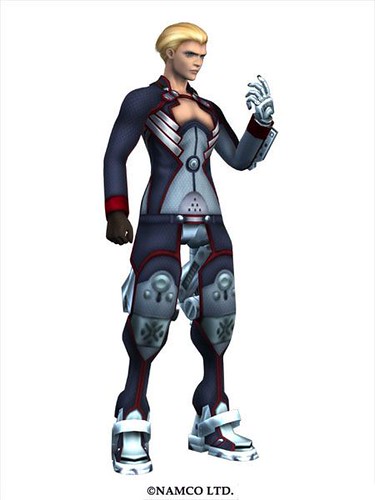
Albedo: A white-haired, virtually immortal psychopath with a fixation on Jr.
Gaignun Kukai: The titular head of the Kukai Foundation. His relationship to Jr. is not immediately apparent, although the similarity of appearance is marked.
Broken down by individual game, all beyond the first entry will contain spoilers for the previous installments:
Xenosaga Episode I: Der Wille zur Macht
Sometime this century, an archeological expedition in Kenya uncovers a golden monolith known as a Zohar, with catastrophic effect. Fast forward a few millenia, to where humans populate over 500,000 planets, but no one knows the location of their original home, now known as Lost Jerusalem.
About fourteen years previously, Shion's home planet of Miltia was ravaged by malfunctioning combat Realians and lost in space-time following the emergence of the Gnosis—extra-dimensional creatures with the ability to crystalize organic life on contact. KOS-MOS is designed to combat Gnosis, but she's untested and unable to repel the attack on their ship which happened to be transporting a Zohar. Shion, KOS-MOS, and a couple of others are the only survivors, picked up by a salvage ship owned by the Kukai Foundation, of which chaos—retained for his ability to dissolve Gnosis with a touch—is a crew member. Along the way they pick up Ziggy and MOMO, the latter having been rescued from Margulis and wanted for the data encoded in her. When Jr.'s battleship is framed for the destruction of Shion's transport in an effort to claim MOMO, they must all work together to get themselves in the clear. Pursued and opposed by any number of factions that want possession of both the Zohar and MOMO, this is, to say the least, no simple task.
Xenosaga Episode II: Jenseits von Gut und Böse
Continuing immediately after the events of the first game, this episode features largely around Jr.'s history. Jin Uzuki is introduced in the beginning in a flashback of the destruction of Miltia, where he meets chaos (physically the same as he is fourteen years later) and a Realian named Canaan, who are trying to find the source of the planet's troubles. Jin manages to give Margulis his distinctive scar at this point, Canaan stores encoded information in his brain until it can be extracted later, and they stumble over and rescue a couple of injured boys: Nigredo and Rubedo, A.K.A. Gaignun Kukai and Jr. In the present time, familial discord abounds as Rubedo and Albedo fight each other over the information still locked inside MOMO, Shion holds Jin to blame for the death of their parents, and chaos is revealed to have a connection to one of the galaxy's major players.
Xenosaga Episode III: Also sprach Zarathustra
A year after the death of Albedo, Shion has left Vector and is working with an underground group of saboteurs known as Scientia. While looking for information about her father's possible involvement in the destruction of Miltia she's called upon by old friends. A section of Lost Jerusalem has appeared, floating in space, but was pulled into an anomaly along with the ship that rescued Shion the previous year. In an effort to save them, Shion and the others finally discover the whole truth behind the destruction of Miltia, the existance of the Gnosis, and the path of destruction that humanity has been nudged along for thousands of years.
Major characters
Shion Uzuki: Lead developer for Vector Industries on project KOS-MOS, a brilliant young woman. I II III
Jin Uzuki: Shion's estranged elder brother. A gifted swordsman, but aimless in life. Professions have included medical doctor and bookstore owner. IIa IIb III
KOS-MOS: An experimental battle android with a fierce loyalty to Shion that trancends her programming. I II III
chaos: A mysterious young man with a gentle disposition that belies his abilities. I IIa IIb III
Jr.: Apparently a boy of about twelve, captain of one of the galaxy's most powerful battleships, and evident successor to the prestigious Kukai Foundation. I II III
MOMO: A prototype Realian—an artificial human—in the form of a young girl. I II III
Ziggy: Zigguraut 8, a cyborg charged with MOMO's protection. His price for taking the mission was to be allowed to die. I II III
Margulis: A fierce opponent and swordsman on par with Jin. They have a shared history.
Albedo: A white-haired, virtually immortal psychopath with a fixation on Jr.
Gaignun Kukai: The titular head of the Kukai Foundation. His relationship to Jr. is not immediately apparent, although the similarity of appearance is marked.
Broken down by individual game, all beyond the first entry will contain spoilers for the previous installments:
Xenosaga Episode I: Der Wille zur Macht
Sometime this century, an archeological expedition in Kenya uncovers a golden monolith known as a Zohar, with catastrophic effect. Fast forward a few millenia, to where humans populate over 500,000 planets, but no one knows the location of their original home, now known as Lost Jerusalem.
About fourteen years previously, Shion's home planet of Miltia was ravaged by malfunctioning combat Realians and lost in space-time following the emergence of the Gnosis—extra-dimensional creatures with the ability to crystalize organic life on contact. KOS-MOS is designed to combat Gnosis, but she's untested and unable to repel the attack on their ship which happened to be transporting a Zohar. Shion, KOS-MOS, and a couple of others are the only survivors, picked up by a salvage ship owned by the Kukai Foundation, of which chaos—retained for his ability to dissolve Gnosis with a touch—is a crew member. Along the way they pick up Ziggy and MOMO, the latter having been rescued from Margulis and wanted for the data encoded in her. When Jr.'s battleship is framed for the destruction of Shion's transport in an effort to claim MOMO, they must all work together to get themselves in the clear. Pursued and opposed by any number of factions that want possession of both the Zohar and MOMO, this is, to say the least, no simple task.
Xenosaga Episode II: Jenseits von Gut und Böse
Continuing immediately after the events of the first game, this episode features largely around Jr.'s history. Jin Uzuki is introduced in the beginning in a flashback of the destruction of Miltia, where he meets chaos (physically the same as he is fourteen years later) and a Realian named Canaan, who are trying to find the source of the planet's troubles. Jin manages to give Margulis his distinctive scar at this point, Canaan stores encoded information in his brain until it can be extracted later, and they stumble over and rescue a couple of injured boys: Nigredo and Rubedo, A.K.A. Gaignun Kukai and Jr. In the present time, familial discord abounds as Rubedo and Albedo fight each other over the information still locked inside MOMO, Shion holds Jin to blame for the death of their parents, and chaos is revealed to have a connection to one of the galaxy's major players.
Xenosaga Episode III: Also sprach Zarathustra
A year after the death of Albedo, Shion has left Vector and is working with an underground group of saboteurs known as Scientia. While looking for information about her father's possible involvement in the destruction of Miltia she's called upon by old friends. A section of Lost Jerusalem has appeared, floating in space, but was pulled into an anomaly along with the ship that rescued Shion the previous year. In an effort to save them, Shion and the others finally discover the whole truth behind the destruction of Miltia, the existance of the Gnosis, and the path of destruction that humanity has been nudged along for thousands of years.
Wednesday, December 19, 2007
The Legend of Zelda: The Wind Waker
The first Zelda for the GameCube in 2002 (2003 outside of Japan) met with mixed reviews. While the gameplay and story were largely praised, there were complaints about the graphical style and the amount of time spent traveling through the enormous world. The cartoony, cel-shaded animation and bright colors lent Wind Waker the appearance of a childlike game which turned off adults who had grown with the series, and it took some time to come to terms with the surprisingly dark storyline behind the cheerful exterior. The name of the game—as well as its musical theme—comes from a conductor's baton that has power over the wind and, among other purposes, is instrumental in your ability to travel.
Many, many years after Ocarina of Time, the world is now a far-flung mass of islands separated by huge swathes of ocean. Link is a boy who's grown up on an island that tells the legend of the Hero of Time and who dress their boys in green when they come of age in order to inspire them with the ancient Hero's courage. When the day comes for Link to receive his green clothing, a giant bird kidnaps his sister, Aryll. With the help of the pirate girl, Tetra, Link gives chase and finds that Ganon has been kidnapping girls in an attempt to find Zelda. Overpowered, Link embarks on a massive quest to find the Master Sword once used by the Hero of Time, restore it to its former power, defeat Ganon, and save the world.
Images:
Link and Aryll
A sad Link waves goodbye while Tetra waits
Phantom Ganon
Plowing the waves
Conducting the wind
Slinking along a cliff face
A rather grainy Zelda
Many, many years after Ocarina of Time, the world is now a far-flung mass of islands separated by huge swathes of ocean. Link is a boy who's grown up on an island that tells the legend of the Hero of Time and who dress their boys in green when they come of age in order to inspire them with the ancient Hero's courage. When the day comes for Link to receive his green clothing, a giant bird kidnaps his sister, Aryll. With the help of the pirate girl, Tetra, Link gives chase and finds that Ganon has been kidnapping girls in an attempt to find Zelda. Overpowered, Link embarks on a massive quest to find the Master Sword once used by the Hero of Time, restore it to its former power, defeat Ganon, and save the world.
Images:
Link and Aryll
A sad Link waves goodbye while Tetra waits
Phantom Ganon
Plowing the waves
Conducting the wind
Slinking along a cliff face
A rather grainy Zelda
Saturday, December 8, 2007
The Legend of Zelda: Majora's Mask
In a rare move, a direct sequel to Ocarina of Time was released in 2000. In an even rarer move, a Zelda game was issued without a Zelda. Featuring the same Link and Epona from its predecessor, everything else is changed when they inadvertently ride into a parallel world. There are three major aspects to Majora's Mask: time, music, and masks. Unlike Ocarina's time travel, Mask relies on a constant timer and a fixed three-day period. Many of the songs from Ocarina are reused, as well as a number of new ones. Masks, which were a small side-quest in Ocarina, take the forefront in Mask (as evidenced by the title) allowing you to perform special tasks, enhance abilities, and even change form by wearing them.
Link is at a loss following his previous exploits. While wandering in the forest he's accosted and loses his horse. After chasing down the thief he's transformed by magic and left, stranded, in a strange, alternate reality. In return for help in resuming his human form, Link agrees to retrieve Majora's Mask for a traveling mask salesman, an ancient and powerful artifact that was stolen by the same person that attacked Link. There's only three days until the Masked thief calls the moon out of its orbit, so the race is on!
Images:
Deku Link is baffled
Goron Link is massive
Jamming with Zora Link
Transforming has a price
Very scary Oni Link—as a collectible figurine!
The opening movie and very early gameplay
Link is at a loss following his previous exploits. While wandering in the forest he's accosted and loses his horse. After chasing down the thief he's transformed by magic and left, stranded, in a strange, alternate reality. In return for help in resuming his human form, Link agrees to retrieve Majora's Mask for a traveling mask salesman, an ancient and powerful artifact that was stolen by the same person that attacked Link. There's only three days until the Masked thief calls the moon out of its orbit, so the race is on!
Images:
Deku Link is baffled
Goron Link is massive
Jamming with Zora Link
Transforming has a price
Very scary Oni Link—as a collectible figurine!
The opening movie and very early gameplay
Thursday, November 29, 2007
The Legend of Zelda: Ocarina of Time
1998 not only brought the Zelda franchise into a new console and three dimensions, but also produced the other major contender for the best Zelda game, and one of the best games ever made, period. Shigeru Miyamoto, the creator, has stated that this is the first game in the chronology and, as such, is the source of the legend for all other Zelda games. Aside from being visually stunning—for the time, and still not too bad today—the elements created in previous games were perfected in this version, other integral bits were added, and all of this was exceptionally adapted to a 3D environment. As one might guess from the title, music, while always important in Zelda games, was brought to the forefront with a variety of catchy tunes that could be played with various effects, ranging from telepathic communication, to instantaneous travel, to summoning a rainstorm, and many more besides. In addition to the visual and auditory beauty, Ocarina of Time is notable for its engaging story, with all the twists it takes, its fleshed out world, and its establishment of the character of Zelda being more than just a girl to be rescued. The history and nature of the Triforce is explained, the origins of Ganon are revealed, and you have a remarkably good time in the process. What more could you ask?
Link is only ten years old on the morning he's awoken by his new companion, Navi, a fairy sent by the Great Deku Tree that protects the Kokiri Forest that he lives in. His elation over having finally obtained his fairy—he's the only Kokiri without one—is quickly squelched by his newly-given mission: save the Great Deku Tree from the curse placed on it by an evil man, then venture into the world of Hyrule to find his destiny. A meeting with the Princess Zelda sets him on a new path, sending the ever-silent Link to the far reaches of the country in an effort to gather the pieces needed to stop the ambitions of the sinister King of the Gerudo tribe, Ganondorf Dragmire. His quest will take him from the safety of his home forest to the fields of Hyrule, the heart of a volcano, the bottom of a lake, the depths of the desert, into the darkest shadows, and through time itself. At least he has Navi along for the ride.
Images:
Young Link explores the world
Link's best friend, Saria
Link meets Zelda for the first time
He learns a song before leaving
Zelda and her nursemaid/bodyguard escape into the night...
...while Link buys them some time against Ganondorf
What seven years can do to a boy...
...or a girl
Pre-game scenery and music
Game opening, including the naming of Link
Link is only ten years old on the morning he's awoken by his new companion, Navi, a fairy sent by the Great Deku Tree that protects the Kokiri Forest that he lives in. His elation over having finally obtained his fairy—he's the only Kokiri without one—is quickly squelched by his newly-given mission: save the Great Deku Tree from the curse placed on it by an evil man, then venture into the world of Hyrule to find his destiny. A meeting with the Princess Zelda sets him on a new path, sending the ever-silent Link to the far reaches of the country in an effort to gather the pieces needed to stop the ambitions of the sinister King of the Gerudo tribe, Ganondorf Dragmire. His quest will take him from the safety of his home forest to the fields of Hyrule, the heart of a volcano, the bottom of a lake, the depths of the desert, into the darkest shadows, and through time itself. At least he has Navi along for the ride.
Images:
Young Link explores the world
Link's best friend, Saria
Link meets Zelda for the first time
He learns a song before leaving
Zelda and her nursemaid/bodyguard escape into the night...
...while Link buys them some time against Ganondorf
What seven years can do to a boy...
...or a girl
Pre-game scenery and music
Game opening, including the naming of Link
Saturday, November 24, 2007
The Legend of Zelda: A Link to the Past
This third incarnation of Zelda is arguably the best. In 1991 (1992 for North America), A Link to the Past took the original formula, added several new elements, shook them up, and presented the world with a dazzling snowglobe of adventure. The inclusion of a more detailed story, the invention of such staples as the Master Sword and the hookshot (quite possibly the coolest item in the history of gaming), and the establishment of a dual-world that has been included in nearly every Zelda game since all go into making this game exciting, memorable, and, most importantly, fun.
Young Link is at home one rainy night when he hears the telepathic voice of Princess Zelda calling for help. His uncle heads out to rescue her, but Link, following behind, soon finds his injured uncle and takes over his mission. The wizard Agahnim is trying to break the seal on the Dark World, where Ganon is imprisoned, using the descendants of the sages who created the seal in the first place. The Master Sword is the only weapon capable of stopping him, and so Link sets out on his multi-part adventure to find the sword, stop Agahnim, save Hyrule, and, as always, save Zelda.
Images:
Smuggling the pricess to safety
A full inventory is a happy inventory
The Light World
The Dark World
Opening movie
Young Link is at home one rainy night when he hears the telepathic voice of Princess Zelda calling for help. His uncle heads out to rescue her, but Link, following behind, soon finds his injured uncle and takes over his mission. The wizard Agahnim is trying to break the seal on the Dark World, where Ganon is imprisoned, using the descendants of the sages who created the seal in the first place. The Master Sword is the only weapon capable of stopping him, and so Link sets out on his multi-part adventure to find the sword, stop Agahnim, save Hyrule, and, as always, save Zelda.
Images:
Smuggling the pricess to safety
A full inventory is a happy inventory
The Light World
The Dark World
Opening movie
Wednesday, November 14, 2007
The Legend of Zelda
The 1986 release (1987 in North America) of The Legend of Zelda was a revolution in gaming. The open-ended play, enormous map, top-down view, and puzzle-solving elements were vast changes from the common side-scrolling games with a definite goal for every level. This first game sparked a long line of successors, all of which reframe the basic concept in any number of ways, and even a short-lived TV series. The connection between the games appears to be on a loose chronology that's nearly impossible to decipher without outside assistance, but each game can be played independently of the others. The innovation of the Zelda games has always been in the gameplay, rather than the story, yet Link, the silent hero of all the games, is consistently one of the most popular game characters of all time. Also worthy of mention is the memorable music, which can be heard here.
The evil Ganon has stolen the Triforce of Power—one of the three mystic triangles containing untold power—from the kingdom of Hyrule. The princess Zelda, before her capture, fractured the Triforce of Wisdom into eight pieces and hid them throughout the land and sent her nursemaid Impa out in search of a hero to help them. Ganon's minions catch up to her, but fortunately Link happens on the scene, saves her, and begins his quest to reunite the Triforce and save Zelda and Hyrule.
That's all there is to the story, and even that is only mentioned in the instruction booklet, but even twenty plus years later, the game draws back old fans and enraptures new ones alike. Later games have refined and expanded on the theme, but the skeleton of a gaming dynasty was built here.
Images:
Booklet art of Link with his collection of items
A classic screen and a phrase that's entered gaming history
The world of Hyrule (and where to find absolutely everything)
Game opening
The evil Ganon has stolen the Triforce of Power—one of the three mystic triangles containing untold power—from the kingdom of Hyrule. The princess Zelda, before her capture, fractured the Triforce of Wisdom into eight pieces and hid them throughout the land and sent her nursemaid Impa out in search of a hero to help them. Ganon's minions catch up to her, but fortunately Link happens on the scene, saves her, and begins his quest to reunite the Triforce and save Zelda and Hyrule.
That's all there is to the story, and even that is only mentioned in the instruction booklet, but even twenty plus years later, the game draws back old fans and enraptures new ones alike. Later games have refined and expanded on the theme, but the skeleton of a gaming dynasty was built here.
Images:
Booklet art of Link with his collection of items
A classic screen and a phrase that's entered gaming history
The world of Hyrule (and where to find absolutely everything)
Game opening
Thursday, September 13, 2007
Shadow of the Colossus
The creators of ICO released this PS2 title as a spiritual successor in 2005, capturing every ounce of its predecessor's staggering beauty and adding even more grandiose majesty. As with ICO, the lack of characters is made up in the personality of the environment, and the openness of the story allows for nearly any interpretation.
Your nameless character arrives at a desolate, ruined temple bearing the body of a young woman. You betrayed a trust, stole a sacred sword, and entered a forbidden land in order to strike a deal with the collective power imprisoned there, known as Dormin, to destroy the sixteen colossi sealing them, and, in return, have them bring the woman back to life. You and your loyal horse, Agro, must explore a vast, breathtaking land in search of each gigantic creature in order to destroy them. Meanwhile, the pursuit from your village closes in, intent on reclaiming the sword and stopping the release of Dormin.
Images:
You, compared to a colossus
In the temple of Dormin
You and Agro
Chasing down a colossus
Another sense of your comparative size
Game introduction
Your nameless character arrives at a desolate, ruined temple bearing the body of a young woman. You betrayed a trust, stole a sacred sword, and entered a forbidden land in order to strike a deal with the collective power imprisoned there, known as Dormin, to destroy the sixteen colossi sealing them, and, in return, have them bring the woman back to life. You and your loyal horse, Agro, must explore a vast, breathtaking land in search of each gigantic creature in order to destroy them. Meanwhile, the pursuit from your village closes in, intent on reclaiming the sword and stopping the release of Dormin.
Images:
You, compared to a colossus
In the temple of Dormin
You and Agro
Chasing down a colossus
Another sense of your comparative size
Game introduction
Monday, September 10, 2007
ICO
This 2001 game for the PS2 was an underground sensation. It was never a massive commercial hit, but the sheer, lyrical beauty of it swayed a devoted audience.
Ico is a young boy, born into a village that periodically produces a child with horns; the child is regarded as a curse and is taken to a castle to be entombed alive. Ico escapes his death due to the decrepit nature of the castle, but the hundreds of similar tombs speak to the fate of the horned children that preceded him. He finds a strange girl called Yorda locked in a cage, who speaks an unknown language, and together they must work to escape. Ico must defend Yorda from the shadows that pursue them and seek to capture her, and Yorda is host to a mysterious power that, alone, can unlock the path to freedom. Neither can leave without the other, and their alliance is the only spark of hope amidst the vast emptiness of the hostile edifice.
Images:
Ico being brought to the castle
Ico and Yorda
The castle courtyard
Light through the windows
The game trailer
Ico is a young boy, born into a village that periodically produces a child with horns; the child is regarded as a curse and is taken to a castle to be entombed alive. Ico escapes his death due to the decrepit nature of the castle, but the hundreds of similar tombs speak to the fate of the horned children that preceded him. He finds a strange girl called Yorda locked in a cage, who speaks an unknown language, and together they must work to escape. Ico must defend Yorda from the shadows that pursue them and seek to capture her, and Yorda is host to a mysterious power that, alone, can unlock the path to freedom. Neither can leave without the other, and their alliance is the only spark of hope amidst the vast emptiness of the hostile edifice.
Images:
Ico being brought to the castle
Ico and Yorda
The castle courtyard
Light through the windows
The game trailer
Friday, September 7, 2007
The Legend of Zelda: Twilight Princess
The 2006 incarnation of Nintendo’s popular Legend of Zelda series for the Wii and Gamecube, Twilight Princess brings some new twists to the classic format. As ever, the land of Hyrule is in danger and the green-clad Link, with his loyal horse Epona, must save it and its princess, Zelda.
This version of Link is a rancher in the small village of Ordon, in the south of Hyrule. When a wave of darkness rolls over the land, Link is warped by it, transformed into a wolf. He is captured and imprisoned, where he meets a strange imp named Midna, who agrees to help him escape if he will help her in her quest to overthrow Zant, a wizard who has usurped the realm of Twilight. Their wary quid pro quo gradually changes into a genuine friendship, and they each sacrifice for the other in order to stop Zant and, ultimately, Ganon.
Images:
Wolf-form Link and Midna
Link
Zelda
Zant
Ganon
Game trailer
This version of Link is a rancher in the small village of Ordon, in the south of Hyrule. When a wave of darkness rolls over the land, Link is warped by it, transformed into a wolf. He is captured and imprisoned, where he meets a strange imp named Midna, who agrees to help him escape if he will help her in her quest to overthrow Zant, a wizard who has usurped the realm of Twilight. Their wary quid pro quo gradually changes into a genuine friendship, and they each sacrifice for the other in order to stop Zant and, ultimately, Ganon.
Images:
Wolf-form Link and Midna
Link
Zelda
Zant
Ganon
Game trailer
Subscribe to:
Posts (Atom)