The sequel to Chrono Trigger was long and eagerly awaited, until Chrono Cross was finally released in 1999 (2000 in North America). As a sequel it was less than ideal, as there are no familiar characters, locations, or anything, and the connection to Trigger is not revealed until very near the end of the game. However, on its own merits, Chrono Cross is an innovative, elaborate, and lovely game. Retaining the lack of random battles from the previous game, it further abandons traditional leveling, instead adding to your abilities in a "star" form as you progress through plot points, as well as a stamina system that gives you more opportunities for action during battles. Most notable are the massive forty-five member cast of playable characters and the eleven different endings, offering very flexible replay with all the possible combinations.
Serge would have been content to live his life in his small fishing village, marrying his girlfriend Leena, and generally never experiencing the world at large. Unfortunately, Fate has a different plan, and poor Serge is sent to an alternate reality in which he died as a child. His family is gone and his friends don't recognize him, but someone apparently does, as soldiers show up to capture him at his own grave. He fights them off with the help of a young thief named Kid and is quickly pulled into her search for the most valuable artifact in the world: the Frozen Flame. A war between nations, the struggle of humans versus demi-humans, and the six Dragon Gods against the destructive impulses of mankind all follow while Serge simply tries to figure out what's happened and how he can get home again. Pursued by Lynx—also after the Frozen Flame, among other things—and alternately helped and hindered by Lynx's companion, Harle, Serge finds out a lot more than he bargained for as to why he's alive and in this reality. It's not pretty, but that's what friends are for, right?
Images:
Serge
Kid
Lynx
Harle
The Frozen Flame
Serge in action
Opening movie
Showing posts with label RPG. Show all posts
Showing posts with label RPG. Show all posts
Tuesday, April 15, 2008


Monday, April 7, 2008
Chrono Trigger
1995 saw the release of a game created by a dream team consisting, among others, of such artists as Hironobu Sakaguchi—the creator of Final Fantasy—Akira Toriyama—the creator of Dragonball—and renowned composer Nobuo Uematsu. It was based on the standard RPG format of the time, but featured several innovations including a lack of random battles, over a dozen possible endings, and extensive, character-building sidequests. Graphics that were lovely for the time remained the same for the Playstation reissue (2001 in North America) but several anime sequences were added, regardless. Fun gameplay, an interesting plot with multiple variants, and the option to recruit a villain as a playable character are just some of the reasons that Chrono Trigger is consistently judged one of the best games of all time.
When Crono bumped into a girl at the Millenial Fair, he certainly didn't expect to end up travelling through time in an effort to stop a global catastrophe. Still, when Marle—the girl in question—vanishes into a strange portal while trying out a prototype teleportation device invented by Crono's friend Lucca, he doesn't hesitate to step in after her. It's the first step in a trip through human history, a massive war of humans versus the Mystics, and the gradual awareness of a parasitic creature that will destroy civilization if Crono and his friends can't stop it.
Images:
The good guys, of all shapes and eras
The Mystics
The showdown with Magus
The ultimate enemy is... a hedgehog?
Opening movie for the PSX
When Crono bumped into a girl at the Millenial Fair, he certainly didn't expect to end up travelling through time in an effort to stop a global catastrophe. Still, when Marle—the girl in question—vanishes into a strange portal while trying out a prototype teleportation device invented by Crono's friend Lucca, he doesn't hesitate to step in after her. It's the first step in a trip through human history, a massive war of humans versus the Mystics, and the gradual awareness of a parasitic creature that will destroy civilization if Crono and his friends can't stop it.
Images:
The good guys, of all shapes and eras
The Mystics
The showdown with Magus
The ultimate enemy is... a hedgehog?
Opening movie for the PSX
Tuesday, March 25, 2008
Final Fantasy VII: Crisis Core
Today, 3/25/08, marks the US release of the long-anticipated prequel to Final Fantasy VII. Crisis Core, while PSP-specific, sports amazing graphics and a fantastic soundtrack, as well as quality voice acting and, quite frankly, the best spin-off of the wildly popular original game. Gathering both critical acclaim and popular appeal, FFVII:CC is a milestone in the franchise. As a prequel, it covers the seven years prior to FFVII leading right up to the moments almost immediately before the start of that game. Featuring characters known to FFVII fans that have not previously been given much face time, this is a game both comforting to old hands and accessible to new players, although only the latter will be surprised at the inevitable tragedy.
Zack Fair is a SOLDIER 2nd Class with a burning desire to prove himself. With the guidance of his friend and mentor Angeal, Zack works his way through the war in Wutai and up the ranks. Their relationship takes a hit, though, when they are sent to retrieve a SOLDIER gone AWOL: Genesis, longtime friend of both Angeal and Sephiroth. The genetic experimentation that is revealed in the search will have lasting implications, and also immediate, devestating impact.
Images:
Zack
Angeal
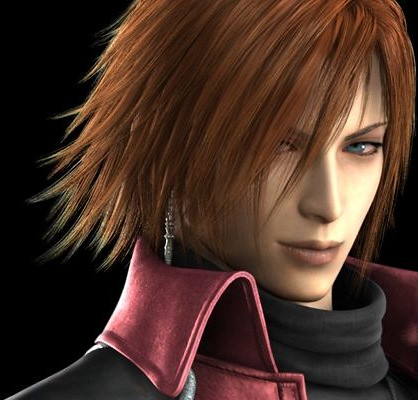
Genesis
Sephiroth
Three friends at play
In-game combat
A familiar scene
A familiar face
The only time you've ever seen Cloud smile
Game trailer
Zack Fair is a SOLDIER 2nd Class with a burning desire to prove himself. With the guidance of his friend and mentor Angeal, Zack works his way through the war in Wutai and up the ranks. Their relationship takes a hit, though, when they are sent to retrieve a SOLDIER gone AWOL: Genesis, longtime friend of both Angeal and Sephiroth. The genetic experimentation that is revealed in the search will have lasting implications, and also immediate, devestating impact.
Images:
Zack
Angeal
Genesis
Sephiroth
Three friends at play
In-game combat
A familiar scene
A familiar face
The only time you've ever seen Cloud smile
Game trailer
Monday, January 7, 2008
Xenosaga
This massive, three-part game (Der Wille zur Macht, 2003; Jenseits von Gut und Böse, 2005; Also sprach Zarathustra, 2006—North American release dates) bears a number of similarities to its spiritual predecessor, Xenogears. Although many of the creators were the same, the company changed, and so the concepts were revisited in a new light without directly connecting the two. The changes continued in the saga, however, as any number of people involved in the creation changed from episode to episode, resulting in occasionally inconsistant character design and some fogginess of overall plot. The conversion from Japan to North America also brought changes in some of the scenes: censored for blood or violence in order to reduce the rating. Also prone to change were the voice actors, resulting in at least one character going from a light tenor to a mellow baritone. Retaining from Xenogears the themes of gnosticism, philosophy, and psychology, Xenosaga heavily references Nietzsche and Jung in everything from the game titles to character names. Much like Xenogears, Xenosaga features long cinematic scenes that occasionally interfere with the feeling of gameplay, but fans tend to overlook the flaws in favor of the incredibly complex story and character relationships. Fortunately, there's an in-game database to help keep people, places, events, and terminology straight. It's a testament to the intricacies of the games that the database is necessary.
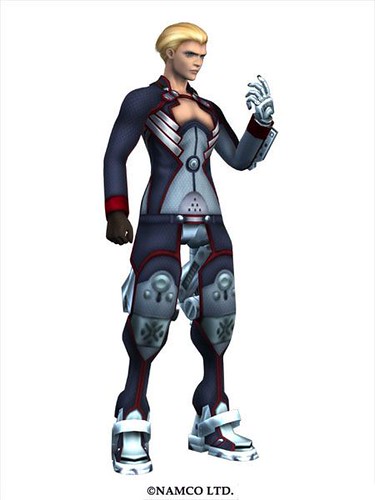
Major characters
Shion Uzuki: Lead developer for Vector Industries on project KOS-MOS, a brilliant young woman. I II III
Jin Uzuki: Shion's estranged elder brother. A gifted swordsman, but aimless in life. Professions have included medical doctor and bookstore owner. IIa IIb III
KOS-MOS: An experimental battle android with a fierce loyalty to Shion that trancends her programming. I II III
chaos: A mysterious young man with a gentle disposition that belies his abilities. I IIa IIb III
Jr.: Apparently a boy of about twelve, captain of one of the galaxy's most powerful battleships, and evident successor to the prestigious Kukai Foundation. I II III
MOMO: A prototype Realian—an artificial human—in the form of a young girl. I II III
Ziggy: Zigguraut 8, a cyborg charged with MOMO's protection. His price for taking the mission was to be allowed to die. I II III
Margulis: A fierce opponent and swordsman on par with Jin. They have a shared history.
Albedo: A white-haired, virtually immortal psychopath with a fixation on Jr.
Gaignun Kukai: The titular head of the Kukai Foundation. His relationship to Jr. is not immediately apparent, although the similarity of appearance is marked.
Broken down by individual game, all beyond the first entry will contain spoilers for the previous installments:
Xenosaga Episode I: Der Wille zur Macht
Sometime this century, an archeological expedition in Kenya uncovers a golden monolith known as a Zohar, with catastrophic effect. Fast forward a few millenia, to where humans populate over 500,000 planets, but no one knows the location of their original home, now known as Lost Jerusalem.
About fourteen years previously, Shion's home planet of Miltia was ravaged by malfunctioning combat Realians and lost in space-time following the emergence of the Gnosis—extra-dimensional creatures with the ability to crystalize organic life on contact. KOS-MOS is designed to combat Gnosis, but she's untested and unable to repel the attack on their ship which happened to be transporting a Zohar. Shion, KOS-MOS, and a couple of others are the only survivors, picked up by a salvage ship owned by the Kukai Foundation, of which chaos—retained for his ability to dissolve Gnosis with a touch—is a crew member. Along the way they pick up Ziggy and MOMO, the latter having been rescued from Margulis and wanted for the data encoded in her. When Jr.'s battleship is framed for the destruction of Shion's transport in an effort to claim MOMO, they must all work together to get themselves in the clear. Pursued and opposed by any number of factions that want possession of both the Zohar and MOMO, this is, to say the least, no simple task.
Xenosaga Episode II: Jenseits von Gut und Böse
Continuing immediately after the events of the first game, this episode features largely around Jr.'s history. Jin Uzuki is introduced in the beginning in a flashback of the destruction of Miltia, where he meets chaos (physically the same as he is fourteen years later) and a Realian named Canaan, who are trying to find the source of the planet's troubles. Jin manages to give Margulis his distinctive scar at this point, Canaan stores encoded information in his brain until it can be extracted later, and they stumble over and rescue a couple of injured boys: Nigredo and Rubedo, A.K.A. Gaignun Kukai and Jr. In the present time, familial discord abounds as Rubedo and Albedo fight each other over the information still locked inside MOMO, Shion holds Jin to blame for the death of their parents, and chaos is revealed to have a connection to one of the galaxy's major players.
Xenosaga Episode III: Also sprach Zarathustra
A year after the death of Albedo, Shion has left Vector and is working with an underground group of saboteurs known as Scientia. While looking for information about her father's possible involvement in the destruction of Miltia she's called upon by old friends. A section of Lost Jerusalem has appeared, floating in space, but was pulled into an anomaly along with the ship that rescued Shion the previous year. In an effort to save them, Shion and the others finally discover the whole truth behind the destruction of Miltia, the existance of the Gnosis, and the path of destruction that humanity has been nudged along for thousands of years.
Major characters
Shion Uzuki: Lead developer for Vector Industries on project KOS-MOS, a brilliant young woman. I II III
Jin Uzuki: Shion's estranged elder brother. A gifted swordsman, but aimless in life. Professions have included medical doctor and bookstore owner. IIa IIb III
KOS-MOS: An experimental battle android with a fierce loyalty to Shion that trancends her programming. I II III
chaos: A mysterious young man with a gentle disposition that belies his abilities. I IIa IIb III
Jr.: Apparently a boy of about twelve, captain of one of the galaxy's most powerful battleships, and evident successor to the prestigious Kukai Foundation. I II III
MOMO: A prototype Realian—an artificial human—in the form of a young girl. I II III
Ziggy: Zigguraut 8, a cyborg charged with MOMO's protection. His price for taking the mission was to be allowed to die. I II III
Margulis: A fierce opponent and swordsman on par with Jin. They have a shared history.
Albedo: A white-haired, virtually immortal psychopath with a fixation on Jr.
Gaignun Kukai: The titular head of the Kukai Foundation. His relationship to Jr. is not immediately apparent, although the similarity of appearance is marked.
Broken down by individual game, all beyond the first entry will contain spoilers for the previous installments:
Xenosaga Episode I: Der Wille zur Macht
Sometime this century, an archeological expedition in Kenya uncovers a golden monolith known as a Zohar, with catastrophic effect. Fast forward a few millenia, to where humans populate over 500,000 planets, but no one knows the location of their original home, now known as Lost Jerusalem.
About fourteen years previously, Shion's home planet of Miltia was ravaged by malfunctioning combat Realians and lost in space-time following the emergence of the Gnosis—extra-dimensional creatures with the ability to crystalize organic life on contact. KOS-MOS is designed to combat Gnosis, but she's untested and unable to repel the attack on their ship which happened to be transporting a Zohar. Shion, KOS-MOS, and a couple of others are the only survivors, picked up by a salvage ship owned by the Kukai Foundation, of which chaos—retained for his ability to dissolve Gnosis with a touch—is a crew member. Along the way they pick up Ziggy and MOMO, the latter having been rescued from Margulis and wanted for the data encoded in her. When Jr.'s battleship is framed for the destruction of Shion's transport in an effort to claim MOMO, they must all work together to get themselves in the clear. Pursued and opposed by any number of factions that want possession of both the Zohar and MOMO, this is, to say the least, no simple task.
Xenosaga Episode II: Jenseits von Gut und Böse
Continuing immediately after the events of the first game, this episode features largely around Jr.'s history. Jin Uzuki is introduced in the beginning in a flashback of the destruction of Miltia, where he meets chaos (physically the same as he is fourteen years later) and a Realian named Canaan, who are trying to find the source of the planet's troubles. Jin manages to give Margulis his distinctive scar at this point, Canaan stores encoded information in his brain until it can be extracted later, and they stumble over and rescue a couple of injured boys: Nigredo and Rubedo, A.K.A. Gaignun Kukai and Jr. In the present time, familial discord abounds as Rubedo and Albedo fight each other over the information still locked inside MOMO, Shion holds Jin to blame for the death of their parents, and chaos is revealed to have a connection to one of the galaxy's major players.
Xenosaga Episode III: Also sprach Zarathustra
A year after the death of Albedo, Shion has left Vector and is working with an underground group of saboteurs known as Scientia. While looking for information about her father's possible involvement in the destruction of Miltia she's called upon by old friends. A section of Lost Jerusalem has appeared, floating in space, but was pulled into an anomaly along with the ship that rescued Shion the previous year. In an effort to save them, Shion and the others finally discover the whole truth behind the destruction of Miltia, the existance of the Gnosis, and the path of destruction that humanity has been nudged along for thousands of years.
Thursday, January 3, 2008
Xenogears
Philosophical, psychological, and religious themes pervade 1998's Xenogears, enough so that a decade later the intricacies and overall meaning of the game are still hotly debated. On the surface it's a confusing mesh of destruction, hatred, and giant robots. Underneath that is a confusing mesh of love, death, betrayal, psychosis, self-determination, and 10,000 years of machinations and plotting. The game mechanics are subject to debate, as the innovative mix of semi-turn-based battle and combination attacks are juxtaposed against the unlikely addition of platforming elements, leading to some extremely unusual jumping puzzles prone to interruption in mid-leap by random battle. Equally subject to debate are the long cutscenes, some lasting upwards of twenty minutes at a time. While the story unfolds and the characters are explored, it can be quite frustrating to play for five minutes, watch ten minutes, play ten seconds, watch fifteen minutes, play thirty minutes, watch twenty minutes, etc. Also of concern to some is the disparity of graphics, with less than stellar in-game animation occasionally being supplanted by hand-drawn anime sequences. Regardless of how they may fall on these minor issues, fans of the game universally applaud the twisted depths of the story, with references ranging from Gnosticism to Soylent Green and the vagaries of Dissociative Identity Disorder and Freudian psychology.
The nations of Aveh and Kislev have been at war for time beyond memory. Kislev had developed an edge until the appearance of a new fighting force, Gebler, put Aveh back on top. The war literally drops into the middle of a quiet border town and the resulting destruction forces Fei—a young man with no memories prior to three years previous when he was taken into the village with severe injuries—to depart for the world at large on the advice of his friend and town doctor, Citan. Fei meets Elly, a Gebler soldier, for the first time in a series of life-changing meetings before falling in with Bart, the deposed heir of Aveh. Reluctantly joining Bart's insurrection, Fei is gradually exposed to the contrived forces behind the war, the feuding religious sects of the Ethos and Nisan, thousands of years of history that had been deliberately buried, and a handful of strange people who alternately want to make him stronger, empower his enemies, or just kill him for existing. The matter of warring nations falls by the wayside as it becomes apparent that the issue at hand is the survival of the human race.
Images:
Your first glimpse of Fei
The improbably-haired Fei against the backdrop of his burning town
Meeting Elly
A recurring image
Bartholomew Fatima (Bart)
Left to right: Bart, Citan, Fei, and Billy—an Ethos warrior priest
The Nisan cathedral
Grahf, who has a habit of empowering Fei's enemies
Id, who has a habit of killing entire cities for amusement
The seemingly irrelevant opening sequence
In-game graphics demo: Citan, Billy, and Elly fight Id
The nations of Aveh and Kislev have been at war for time beyond memory. Kislev had developed an edge until the appearance of a new fighting force, Gebler, put Aveh back on top. The war literally drops into the middle of a quiet border town and the resulting destruction forces Fei—a young man with no memories prior to three years previous when he was taken into the village with severe injuries—to depart for the world at large on the advice of his friend and town doctor, Citan. Fei meets Elly, a Gebler soldier, for the first time in a series of life-changing meetings before falling in with Bart, the deposed heir of Aveh. Reluctantly joining Bart's insurrection, Fei is gradually exposed to the contrived forces behind the war, the feuding religious sects of the Ethos and Nisan, thousands of years of history that had been deliberately buried, and a handful of strange people who alternately want to make him stronger, empower his enemies, or just kill him for existing. The matter of warring nations falls by the wayside as it becomes apparent that the issue at hand is the survival of the human race.
Images:
Your first glimpse of Fei
The improbably-haired Fei against the backdrop of his burning town
Meeting Elly
A recurring image
Bartholomew Fatima (Bart)
Left to right: Bart, Citan, Fei, and Billy—an Ethos warrior priest
The Nisan cathedral
Grahf, who has a habit of empowering Fei's enemies
Id, who has a habit of killing entire cities for amusement
The seemingly irrelevant opening sequence
In-game graphics demo: Citan, Billy, and Elly fight Id
Wednesday, December 19, 2007
The Legend of Zelda: The Wind Waker
The first Zelda for the GameCube in 2002 (2003 outside of Japan) met with mixed reviews. While the gameplay and story were largely praised, there were complaints about the graphical style and the amount of time spent traveling through the enormous world. The cartoony, cel-shaded animation and bright colors lent Wind Waker the appearance of a childlike game which turned off adults who had grown with the series, and it took some time to come to terms with the surprisingly dark storyline behind the cheerful exterior. The name of the game—as well as its musical theme—comes from a conductor's baton that has power over the wind and, among other purposes, is instrumental in your ability to travel.
Many, many years after Ocarina of Time, the world is now a far-flung mass of islands separated by huge swathes of ocean. Link is a boy who's grown up on an island that tells the legend of the Hero of Time and who dress their boys in green when they come of age in order to inspire them with the ancient Hero's courage. When the day comes for Link to receive his green clothing, a giant bird kidnaps his sister, Aryll. With the help of the pirate girl, Tetra, Link gives chase and finds that Ganon has been kidnapping girls in an attempt to find Zelda. Overpowered, Link embarks on a massive quest to find the Master Sword once used by the Hero of Time, restore it to its former power, defeat Ganon, and save the world.
Images:
Link and Aryll
A sad Link waves goodbye while Tetra waits
Phantom Ganon
Plowing the waves
Conducting the wind
Slinking along a cliff face
A rather grainy Zelda
Many, many years after Ocarina of Time, the world is now a far-flung mass of islands separated by huge swathes of ocean. Link is a boy who's grown up on an island that tells the legend of the Hero of Time and who dress their boys in green when they come of age in order to inspire them with the ancient Hero's courage. When the day comes for Link to receive his green clothing, a giant bird kidnaps his sister, Aryll. With the help of the pirate girl, Tetra, Link gives chase and finds that Ganon has been kidnapping girls in an attempt to find Zelda. Overpowered, Link embarks on a massive quest to find the Master Sword once used by the Hero of Time, restore it to its former power, defeat Ganon, and save the world.
Images:
Link and Aryll
A sad Link waves goodbye while Tetra waits
Phantom Ganon
Plowing the waves
Conducting the wind
Slinking along a cliff face
A rather grainy Zelda
Saturday, December 8, 2007
The Legend of Zelda: Majora's Mask
In a rare move, a direct sequel to Ocarina of Time was released in 2000. In an even rarer move, a Zelda game was issued without a Zelda. Featuring the same Link and Epona from its predecessor, everything else is changed when they inadvertently ride into a parallel world. There are three major aspects to Majora's Mask: time, music, and masks. Unlike Ocarina's time travel, Mask relies on a constant timer and a fixed three-day period. Many of the songs from Ocarina are reused, as well as a number of new ones. Masks, which were a small side-quest in Ocarina, take the forefront in Mask (as evidenced by the title) allowing you to perform special tasks, enhance abilities, and even change form by wearing them.
Link is at a loss following his previous exploits. While wandering in the forest he's accosted and loses his horse. After chasing down the thief he's transformed by magic and left, stranded, in a strange, alternate reality. In return for help in resuming his human form, Link agrees to retrieve Majora's Mask for a traveling mask salesman, an ancient and powerful artifact that was stolen by the same person that attacked Link. There's only three days until the Masked thief calls the moon out of its orbit, so the race is on!
Images:
Deku Link is baffled
Goron Link is massive
Jamming with Zora Link
Transforming has a price
Very scary Oni Link—as a collectible figurine!
The opening movie and very early gameplay
Link is at a loss following his previous exploits. While wandering in the forest he's accosted and loses his horse. After chasing down the thief he's transformed by magic and left, stranded, in a strange, alternate reality. In return for help in resuming his human form, Link agrees to retrieve Majora's Mask for a traveling mask salesman, an ancient and powerful artifact that was stolen by the same person that attacked Link. There's only three days until the Masked thief calls the moon out of its orbit, so the race is on!
Images:
Deku Link is baffled
Goron Link is massive
Jamming with Zora Link
Transforming has a price
Very scary Oni Link—as a collectible figurine!
The opening movie and very early gameplay
Thursday, November 29, 2007
The Legend of Zelda: Ocarina of Time
1998 not only brought the Zelda franchise into a new console and three dimensions, but also produced the other major contender for the best Zelda game, and one of the best games ever made, period. Shigeru Miyamoto, the creator, has stated that this is the first game in the chronology and, as such, is the source of the legend for all other Zelda games. Aside from being visually stunning—for the time, and still not too bad today—the elements created in previous games were perfected in this version, other integral bits were added, and all of this was exceptionally adapted to a 3D environment. As one might guess from the title, music, while always important in Zelda games, was brought to the forefront with a variety of catchy tunes that could be played with various effects, ranging from telepathic communication, to instantaneous travel, to summoning a rainstorm, and many more besides. In addition to the visual and auditory beauty, Ocarina of Time is notable for its engaging story, with all the twists it takes, its fleshed out world, and its establishment of the character of Zelda being more than just a girl to be rescued. The history and nature of the Triforce is explained, the origins of Ganon are revealed, and you have a remarkably good time in the process. What more could you ask?
Link is only ten years old on the morning he's awoken by his new companion, Navi, a fairy sent by the Great Deku Tree that protects the Kokiri Forest that he lives in. His elation over having finally obtained his fairy—he's the only Kokiri without one—is quickly squelched by his newly-given mission: save the Great Deku Tree from the curse placed on it by an evil man, then venture into the world of Hyrule to find his destiny. A meeting with the Princess Zelda sets him on a new path, sending the ever-silent Link to the far reaches of the country in an effort to gather the pieces needed to stop the ambitions of the sinister King of the Gerudo tribe, Ganondorf Dragmire. His quest will take him from the safety of his home forest to the fields of Hyrule, the heart of a volcano, the bottom of a lake, the depths of the desert, into the darkest shadows, and through time itself. At least he has Navi along for the ride.
Images:
Young Link explores the world
Link's best friend, Saria
Link meets Zelda for the first time
He learns a song before leaving
Zelda and her nursemaid/bodyguard escape into the night...
...while Link buys them some time against Ganondorf
What seven years can do to a boy...
...or a girl
Pre-game scenery and music
Game opening, including the naming of Link
Link is only ten years old on the morning he's awoken by his new companion, Navi, a fairy sent by the Great Deku Tree that protects the Kokiri Forest that he lives in. His elation over having finally obtained his fairy—he's the only Kokiri without one—is quickly squelched by his newly-given mission: save the Great Deku Tree from the curse placed on it by an evil man, then venture into the world of Hyrule to find his destiny. A meeting with the Princess Zelda sets him on a new path, sending the ever-silent Link to the far reaches of the country in an effort to gather the pieces needed to stop the ambitions of the sinister King of the Gerudo tribe, Ganondorf Dragmire. His quest will take him from the safety of his home forest to the fields of Hyrule, the heart of a volcano, the bottom of a lake, the depths of the desert, into the darkest shadows, and through time itself. At least he has Navi along for the ride.
Images:
Young Link explores the world
Link's best friend, Saria
Link meets Zelda for the first time
He learns a song before leaving
Zelda and her nursemaid/bodyguard escape into the night...
...while Link buys them some time against Ganondorf
What seven years can do to a boy...
...or a girl
Pre-game scenery and music
Game opening, including the naming of Link
Saturday, November 24, 2007
The Legend of Zelda: A Link to the Past
This third incarnation of Zelda is arguably the best. In 1991 (1992 for North America), A Link to the Past took the original formula, added several new elements, shook them up, and presented the world with a dazzling snowglobe of adventure. The inclusion of a more detailed story, the invention of such staples as the Master Sword and the hookshot (quite possibly the coolest item in the history of gaming), and the establishment of a dual-world that has been included in nearly every Zelda game since all go into making this game exciting, memorable, and, most importantly, fun.
Young Link is at home one rainy night when he hears the telepathic voice of Princess Zelda calling for help. His uncle heads out to rescue her, but Link, following behind, soon finds his injured uncle and takes over his mission. The wizard Agahnim is trying to break the seal on the Dark World, where Ganon is imprisoned, using the descendants of the sages who created the seal in the first place. The Master Sword is the only weapon capable of stopping him, and so Link sets out on his multi-part adventure to find the sword, stop Agahnim, save Hyrule, and, as always, save Zelda.
Images:
Smuggling the pricess to safety
A full inventory is a happy inventory
The Light World
The Dark World
Opening movie
Young Link is at home one rainy night when he hears the telepathic voice of Princess Zelda calling for help. His uncle heads out to rescue her, but Link, following behind, soon finds his injured uncle and takes over his mission. The wizard Agahnim is trying to break the seal on the Dark World, where Ganon is imprisoned, using the descendants of the sages who created the seal in the first place. The Master Sword is the only weapon capable of stopping him, and so Link sets out on his multi-part adventure to find the sword, stop Agahnim, save Hyrule, and, as always, save Zelda.
Images:
Smuggling the pricess to safety
A full inventory is a happy inventory
The Light World
The Dark World
Opening movie
Monday, November 5, 2007
Final Fantasy XII
Following the release of FFXI as an online, mulitplayer game, 2006's XII came back to the console with some of the MMORPG elements incorporated. The battle system, rather than being some form of turn-based combat as all previous incarnations had been, was changed to a modified AI system where you can pre-set conditional actions that will happen without you dancing attendance on them, although you may use direct input at will, resulting in a game that, at times, literally plays itself. While this upset a number of people, it also made others very happy by removing the tedium of random combat and levelling by streamlining repetitive actions. Mechanics aside, the story has generated a lot of controversy among fans. Those who like the game enjoy the broad story that deals more with the politics of nations than individuals, the fact that the main playable character is not the central focus of the story, and that there isn't a romance shoehorned into the mix. Those who dislike the game cite the same examples.
A trio of countries used to stand between the empires of Archadia and Rozarria, but the Republic of Landis has been absorbed by Archadia, Nabradia is a ruined wasteland, and Dalmasca is occupied territory. Vaan, a native Dalmascan with a grudge, invades the palace during a banquet to "welcome" the new governor, Lord Vayne of Arcadia. His efforts to steal back something for the people are stymied by a run-in with a sky pirate and his partner who are after the same treasure. Eventually this leads to meeting up with the deposed—and presumed dead—princess of Dalmasca, and the man who supposedly betrayed the country and assassinated the king. The web of deceit is tough to untangle as factions in Archadia play against each other for control, Rozarria is alternately courted and provoked, and Dalmasca and her people are once again caught in the middle.
Images:
Vaan with his friend, Penelo
Balthier, the sky pirate
Fran, his Viera partner
Ashe, princess of Dalmasca
Basch, reputed kingslayer
Vayne Solidor
Al-Cid Margrace of Rozarria makes nice
Opening movie: The fall of Nabradia; Ashe is wedded and widowed
Vayne, the politician
Vaan meets the sky pirates
A trio of countries used to stand between the empires of Archadia and Rozarria, but the Republic of Landis has been absorbed by Archadia, Nabradia is a ruined wasteland, and Dalmasca is occupied territory. Vaan, a native Dalmascan with a grudge, invades the palace during a banquet to "welcome" the new governor, Lord Vayne of Arcadia. His efforts to steal back something for the people are stymied by a run-in with a sky pirate and his partner who are after the same treasure. Eventually this leads to meeting up with the deposed—and presumed dead—princess of Dalmasca, and the man who supposedly betrayed the country and assassinated the king. The web of deceit is tough to untangle as factions in Archadia play against each other for control, Rozarria is alternately courted and provoked, and Dalmasca and her people are once again caught in the middle.
Images:
Vaan with his friend, Penelo
Balthier, the sky pirate
Fran, his Viera partner
Ashe, princess of Dalmasca
Basch, reputed kingslayer
Vayne Solidor
Al-Cid Margrace of Rozarria makes nice
Opening movie: The fall of Nabradia; Ashe is wedded and widowed
Vayne, the politician
Vaan meets the sky pirates
Saturday, October 27, 2007
Final Fantasy Tactics
Taking a step back in time, 1997 (1998 for North America) saw the release of Final Fantasy Tactics, not the first of the non-numbered spinoff games, but one of the most popular released on a main console, rather than a handheld. While it suffered from egregious translation errors, it had the benefit of purely strategic combat and an intricate, heavily political plot.
History is dictated by the winners and those who claim victory. Legend tells of a hero of the Lion Wars, Delita, a man who rose from humble origins, stopped a budding civil war, and became king. What is left out of the books, though, is the story of Ramza Beoulve, youngest son of a noble house and best friend of the stablemaster's son, Delita. The two part ways after a tragedy that leaves Ramza disgusted with the attitudes of the nobles and Delita swearing revenge against all of the nobility, even an old friend. Some time later, Ramza is working as a mercenary guarding the princess Ovelia when she is kidnapped by Delita. His initial effort to rescue his charge and find out what's going on with his friend is rapidly mired in a shifting morass of political alliances betrayed, church coverups, assassinations, fratricide, patricide, and the ever-present conflict of commoners versus nobility.
Images:
Concept art of a more innocent Ramza
Concept art of a disillusioned Ramza
Concept art of Delita
Concept art of Ovelia
Ramza and Delita talking
A battle in progress
The opening movie and credits
History is dictated by the winners and those who claim victory. Legend tells of a hero of the Lion Wars, Delita, a man who rose from humble origins, stopped a budding civil war, and became king. What is left out of the books, though, is the story of Ramza Beoulve, youngest son of a noble house and best friend of the stablemaster's son, Delita. The two part ways after a tragedy that leaves Ramza disgusted with the attitudes of the nobles and Delita swearing revenge against all of the nobility, even an old friend. Some time later, Ramza is working as a mercenary guarding the princess Ovelia when she is kidnapped by Delita. His initial effort to rescue his charge and find out what's going on with his friend is rapidly mired in a shifting morass of political alliances betrayed, church coverups, assassinations, fratricide, patricide, and the ever-present conflict of commoners versus nobility.
Images:
Concept art of a more innocent Ramza
Concept art of a disillusioned Ramza
Concept art of Delita
Concept art of Ovelia
Ramza and Delita talking
A battle in progress
The opening movie and credits
Saturday, October 20, 2007
Final Fantasy X
The transition to the PS2 meant a lot of changes for Final Fantasy. FFX, released in 2001, heralded a shift to the highly cinematic, brought voice acting to the series, and completely altered the traditional leveling system. The modified turn-based combat system allows for greater strategy than previous offerings have had, and the ability to change characters in battle makes for greater flexibility. The minigames, particularly blitzball (the sport of choice in this game's world) come in varying levels of addictive, and add spice to the atmosphere. These technical aspects, along with its dramatic, character-intensive story that is lauded among fans, make for its wide regard as one of the best games both in the series and outside it, and it is the first FF to spawn a direct sequel.
Tidus is having a rough time of things. In the course of an evening he's gone from being a famous blitzball player to seeing his city of Zanarkand destroyed and being a refugee in a world where he's regarded as crazy if he mentions his home. Lacking anything better to do he falls into a position of guarding Yuna, a summoner on her pilgrimage to defeat Sin—the creature that appears about every ten years until a summoner takes it down. Guarding Yuna is an interesting job, between random monsters, assaults from Sin, kidnapping attempts, a budding war, a prospective marriage, and the puzzling temples that are stops on her voyage. The truths that unfold about the nature of their journey, the Aeons that summoners call on, and the history of both Zanarkand and the church that dominates the world of Spira are tragic, and really put a cramp in the already difficult process of falling in love.
Images:
Tidus
Yuna
The playable cast from left: Kimari, Yuna, Wakka, Tidus, Rikku, Lulu, and Auron
Transition to battle
Game opening: blitzball and destruction
Yuna dances for the deceased
Yuna summons a classic; Shiva's new look
Tidus is having a rough time of things. In the course of an evening he's gone from being a famous blitzball player to seeing his city of Zanarkand destroyed and being a refugee in a world where he's regarded as crazy if he mentions his home. Lacking anything better to do he falls into a position of guarding Yuna, a summoner on her pilgrimage to defeat Sin—the creature that appears about every ten years until a summoner takes it down. Guarding Yuna is an interesting job, between random monsters, assaults from Sin, kidnapping attempts, a budding war, a prospective marriage, and the puzzling temples that are stops on her voyage. The truths that unfold about the nature of their journey, the Aeons that summoners call on, and the history of both Zanarkand and the church that dominates the world of Spira are tragic, and really put a cramp in the already difficult process of falling in love.
Images:
Tidus
Yuna
The playable cast from left: Kimari, Yuna, Wakka, Tidus, Rikku, Lulu, and Auron
Transition to battle
Game opening: blitzball and destruction
Yuna dances for the deceased
Yuna summons a classic; Shiva's new look
Monday, October 15, 2007
Final Fantasy IX
Since their last effort was less than well-regarded by many, SquareSoft revised their angle with 2000's release. FFIX went back to its roots with a strong fantasy angle, classic gameplay (pre-determined roles and abilities rather than flexible ones), and more references to previous games than you can shake a Gysahl Green at, up to and including musical themes. Critics gave the game excellent reviews, but the public, perhaps made leery by the last game, didn't seem to go for it as much. For those who were not put off by the art style and classic elements, however, IX is championed as one of the best in the series.
Zidane, thief and actor in the roving troupe Tantalus, doesn't much care that he doesn't know where he came from, or that he happens to have a tail—he's far too busy having a good time. His good time extends to kidnapping the princess of Alexandria on orders from her uncle, which works out well, since the princess herself asks to be kidnapped. She's tired of being kept in the dark by her war-mongering mother and wants to get out. Adopting the name Dagger, and followed by the captain of the guard, Steiner, she, Zidane, and a small assortment of fellows they collect on the way are rapidly engulfed in an expansive war that overtakes the entire world. Queen Brahne creates a path of wholesale destruction, assisted by her arms dealer, Kuja, who turns out to be so much more...
Images:
Zidane
Dagger
Conspiracy to kidnap
Kuja
Game intro movie
Escape from the forest
Zidane, thief and actor in the roving troupe Tantalus, doesn't much care that he doesn't know where he came from, or that he happens to have a tail—he's far too busy having a good time. His good time extends to kidnapping the princess of Alexandria on orders from her uncle, which works out well, since the princess herself asks to be kidnapped. She's tired of being kept in the dark by her war-mongering mother and wants to get out. Adopting the name Dagger, and followed by the captain of the guard, Steiner, she, Zidane, and a small assortment of fellows they collect on the way are rapidly engulfed in an expansive war that overtakes the entire world. Queen Brahne creates a path of wholesale destruction, assisted by her arms dealer, Kuja, who turns out to be so much more...
Images:
Zidane
Dagger
Conspiracy to kidnap
Kuja
Game intro movie
Escape from the forest
Tuesday, October 9, 2007
Final Fantasy VIII
1999 marked an effort of realism with FFVIII. Character models had realistic proportions, real actors were recorded to make motions look realistic, the settings made an effort to look realistic... sadly, however, this game was widely panned by new fans for not being FFVII-2 and by old fans for lacking the fantasy aspect they loved. Sorceresses, magic, mysterious links to past events, and guardian forces aside, this is also a game with monsters falling from the moon, an orbiting satellite prison, flying anti-gravity buildings, a zero-G rescue mission, and your very own spaceship. If you really look, you can even find an alien. This is very much a love it or hate it game. The ones who love it really, really love it and the ones who hate it would rather poke out their eyes with a fork than play it. Middle ground is rare with this one, so it must be doing something right.
Squall Leonhart is taciturn and withdrawn. He's also one of the very few masters of his chosen weapon—the gunblade—at his school, a military academy that trains the students for the chance to join an elite mercenary force called SeeD. With the help of his instructor, Quistis, Squall qualifies for the SeeD exam, along with his rival, Seifer, and fellow students Zell and Selphie. Following his sterling performance he is accepted into the ranks of SeeD, and at the celebratory ball he is knocked off his feet by a young woman completely unlike any he's met before. Little does he know that she—Rinoa—is going to embroil him in a massive affair of global politics, power-hungry sorceresses past, present, and future, Squall's unknown parentage, and, most difficult of all, his own walled-up emotions. And that's all before spacetime starts breaking apart.
Images:
Squall
Seifer
Quistis
Rinoa
Zell
Selphie
Irvine
Sorceress Edea
Game into movie
Ballroom dance movie
Squall Leonhart is taciturn and withdrawn. He's also one of the very few masters of his chosen weapon—the gunblade—at his school, a military academy that trains the students for the chance to join an elite mercenary force called SeeD. With the help of his instructor, Quistis, Squall qualifies for the SeeD exam, along with his rival, Seifer, and fellow students Zell and Selphie. Following his sterling performance he is accepted into the ranks of SeeD, and at the celebratory ball he is knocked off his feet by a young woman completely unlike any he's met before. Little does he know that she—Rinoa—is going to embroil him in a massive affair of global politics, power-hungry sorceresses past, present, and future, Squall's unknown parentage, and, most difficult of all, his own walled-up emotions. And that's all before spacetime starts breaking apart.
Images:
Squall
Seifer
Quistis
Rinoa
Zell
Selphie
Irvine
Sorceress Edea
Game into movie
Ballroom dance movie
Tuesday, October 2, 2007
Final Fantasy VII
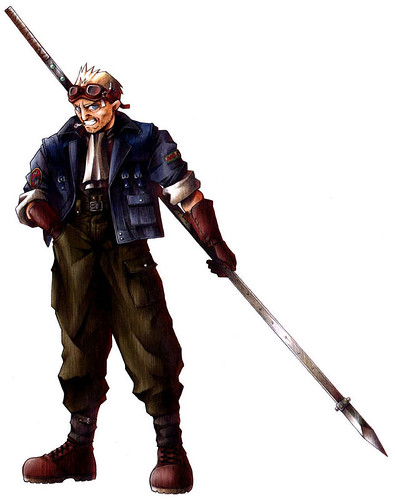
The first FF on the Playstation. The first FF released for PCs. The first FF to feature 3D graphics and fully animated movie clips. Quite probably the best-selling Final Fantasy game ever made. 1997's release of Final Fantasy VII brought the series to vast numbers of people who had never before played it on the Nintendo consoles, and made more die-hard fanatics than any FF before or since. While not the only game in the series to have a related game (X has a direct sequel, and XII has a sequel in production), VII has three spin-off games, two films, and two novellas based on it. It catapulted the silver-haired prettyboy phenomenon into rabid popularity, is prone to some truly terrible translation gaffes, and has caused innumerable other works to suffer by comparison. It features the most popular incarnation of Cid—and the only one that's a main, playable character—the most popular villain, and one of the most popular main characters of any game. Love it or hate it, Final Fantasy VII is a powerful force in the game world, and will remain so for some time.
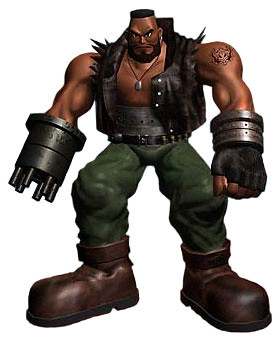
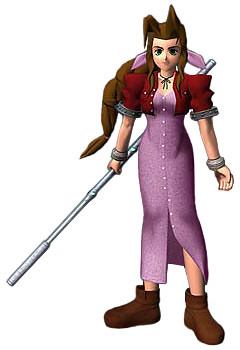
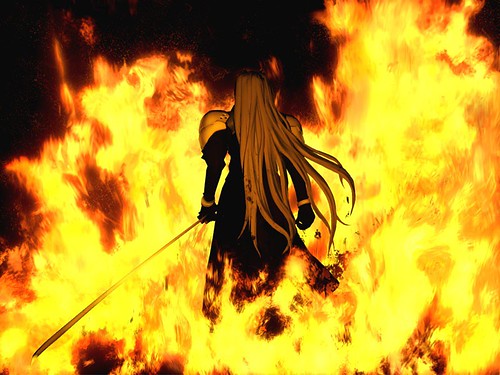
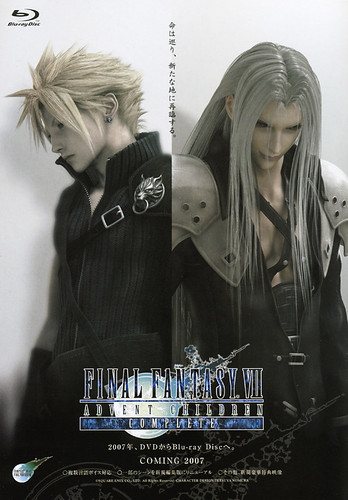
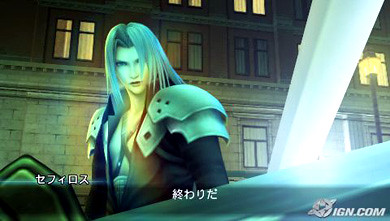
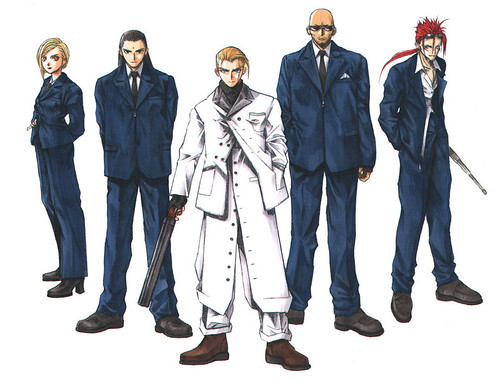
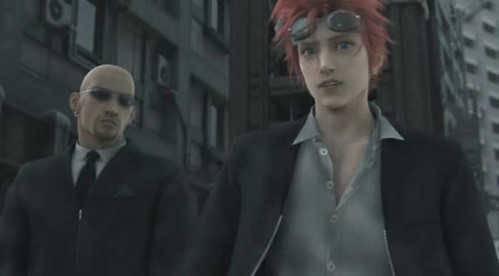
Shinra Power is a monolithic corporation with direct control over the city-state of Midgar, and indirect control over the majority of the world. Mako is the concentrated lifeforce of the planet, and the energy source mined and distributed by Shinra. SOLDIERs are the elite of Shinra's army, created by saturating ordinary people with high concentrations of mako and keeping the ones that survive the process. Cloud Strife is a SOLDIER-turned-mercenary with massive gaps in his memory who joins an eco-terrorist group called AVALANCHE—headed by Barret Wallace—at the request of his childhood friend, Tifa. After planting a bomb that destroys one of the eight mako reactors in Midgar, Cloud meets Aerith (mistranslated in the game as Aeris), an innocent young woman being pursued by the Turks, Shinra's enforcers. Finding out why Shinra wants her is only the beginning, as it seems that Sephiroth—Shinra's leading general, most accomplished SOLDIER, and presumed corpse for the last five years—is alive, insane, and more powerful than ever.
Images:
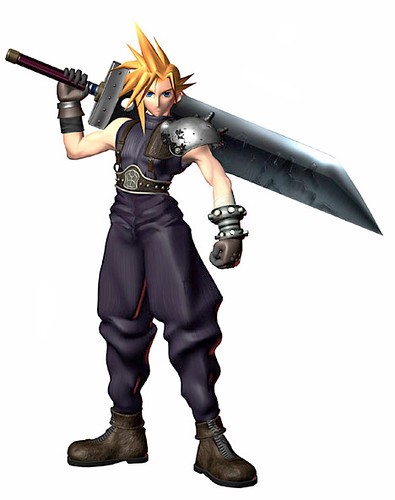
Cloud
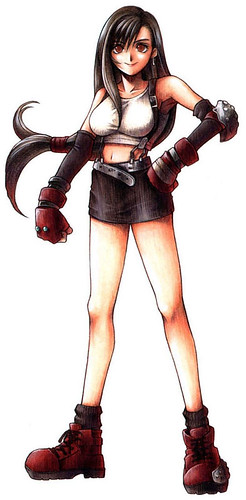
Tifa
Barret
Aerith
Cid
The famous Sephiroth scene
Cloud and Sephiroth on the poster for the movie Advent Children
Sephiroth as seen in Crisis Core
Rufus Shinra and the Turks: Elena, Tseng, Rude, and Reno
Rude and Reno as they appear in Advent Children
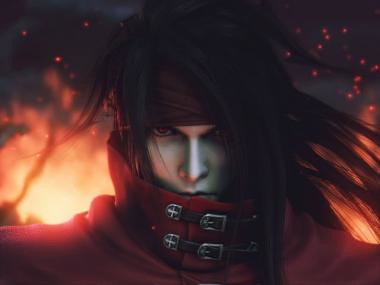
Vincent Valentine in Dirge of Cerberus
The original game intro compared to the tech demo remake for the PS3
Eminence Symphony Orchestra performing Sephiroth's theme song
Shinra Power is a monolithic corporation with direct control over the city-state of Midgar, and indirect control over the majority of the world. Mako is the concentrated lifeforce of the planet, and the energy source mined and distributed by Shinra. SOLDIERs are the elite of Shinra's army, created by saturating ordinary people with high concentrations of mako and keeping the ones that survive the process. Cloud Strife is a SOLDIER-turned-mercenary with massive gaps in his memory who joins an eco-terrorist group called AVALANCHE—headed by Barret Wallace—at the request of his childhood friend, Tifa. After planting a bomb that destroys one of the eight mako reactors in Midgar, Cloud meets Aerith (mistranslated in the game as Aeris), an innocent young woman being pursued by the Turks, Shinra's enforcers. Finding out why Shinra wants her is only the beginning, as it seems that Sephiroth—Shinra's leading general, most accomplished SOLDIER, and presumed corpse for the last five years—is alive, insane, and more powerful than ever.
Images:
Cloud
Tifa
Barret
Aerith
Cid
The famous Sephiroth scene
Cloud and Sephiroth on the poster for the movie Advent Children
Sephiroth as seen in Crisis Core
Rufus Shinra and the Turks: Elena, Tseng, Rude, and Reno
Rude and Reno as they appear in Advent Children
Vincent Valentine in Dirge of Cerberus
The original game intro compared to the tech demo remake for the PS3
Eminence Symphony Orchestra performing Sephiroth's theme song
Monday, October 1, 2007
Final Fantasy VI
1994 saw the release of the last Final Fantasy game for the SNES, although, as with IV, it was misnumbered in the North American release as III. Featuring an intricate story, fully-fleshed characters, the largest playable cast of any numbered FF game to date, the introduction of steampunk to the series, and one of the most memorably evil villains, it's another contender for the best Final Fantasy game.
Terra Branford has grown up as a slave under the control of Emperor Gestahl. Locke Cole is a "treasure hunter" with strong anti-Empire leanings. When Terra breaks free of imperial control and is found by Locke, a chain of events is set in motion that will break apart the world as it is known. Joined by Celes, a general of the Empire who realizes what's going on; Edgar, king of the neighboring country of Figaro; his brother Sabin, an ascetic; Shadow, an assassin with a secret; Cyan, a man who has lost everything to the predations of the Empire; and a small host of others, they try to stop Gestahl and his insane right-hand Kefka from exploiting the Espers—a race of magical people—and conquering the world.
Images:
Icons of the entire playable cast, in order:
Terra, Locke, Edgar, Sabin, Celes, Shadow, Cyan, Mog, Gau, Setzer, Relm, Strago, Umaro, and Gogo
Concept art of Kefka
The self-proclaimed Angel of Death
Intro sequence for the PSX
Opening scenes on the GBA
Terra Branford has grown up as a slave under the control of Emperor Gestahl. Locke Cole is a "treasure hunter" with strong anti-Empire leanings. When Terra breaks free of imperial control and is found by Locke, a chain of events is set in motion that will break apart the world as it is known. Joined by Celes, a general of the Empire who realizes what's going on; Edgar, king of the neighboring country of Figaro; his brother Sabin, an ascetic; Shadow, an assassin with a secret; Cyan, a man who has lost everything to the predations of the Empire; and a small host of others, they try to stop Gestahl and his insane right-hand Kefka from exploiting the Espers—a race of magical people—and conquering the world.
Images:
Icons of the entire playable cast, in order:
Terra, Locke, Edgar, Sabin, Celes, Shadow, Cyan, Mog, Gau, Setzer, Relm, Strago, Umaro, and Gogo
Concept art of Kefka
The self-proclaimed Angel of Death
Intro sequence for the PSX
Opening scenes on the GBA
Thursday, September 27, 2007
Final Fantasy IV
Although fourth in the series, this 1991 offering for the SNES was only the second to be released in North America, and is often still referred to as Final Fantasy II for that reason. It has, like the original game, been remade several times for a number of systems. As the innovator of any number of conventions that would later be used in the series and notable for having the first playable Cid—a character that has appeared in some form in every FF since II—this game is among the top contenders for the highly contested rank of Best Final Fantasy Game Ever.
The story focuses on Cecil, Dark Knight and captain of the Red Wings, the fleet of airships belonging to the country of Baron. After being sent to a peaceful town to steal a Crystal in what amounted to a massacre, Cecil questions his king's motives. Given a vague reassurance, he is sent on a mission to deliver a package to another town. Accompanied by his best friend, Kain—who can't quite disguise his love for Cecil's girlfriend, Rosa—Cecil journeys to Mist, home of the Summoners, only to discover that the package he is carrying is actually a bomb. The entire town is obliterated, leaving a young girl as the sole survivor. The girl, Rydia, summons Titan with the last of her strength, causing an earthquake that changes the landscape and separates Cecil and Kain. Angered by the betrayal and grieved by the destruction he inadvertently caused, Cecil undertakes a quest to redeem himself and stop his former king. Betrayal, redemption, and sacrifice abound as Cecil gathers companions only to lose them again, culminating in an otherworldly showdown with a force of primal hatred and destruction.
Images:
Concept art of Cecil
Concept art of Kain
Concept art of Rosa
Concept art of Cecil, post-redemption
Screenshot of Cecil confronting Baron's king
Cecil and Kain fighting the Mist dragon
Game introduction video for the GBA vs. the SNES
Trailer for the DS remake
The story focuses on Cecil, Dark Knight and captain of the Red Wings, the fleet of airships belonging to the country of Baron. After being sent to a peaceful town to steal a Crystal in what amounted to a massacre, Cecil questions his king's motives. Given a vague reassurance, he is sent on a mission to deliver a package to another town. Accompanied by his best friend, Kain—who can't quite disguise his love for Cecil's girlfriend, Rosa—Cecil journeys to Mist, home of the Summoners, only to discover that the package he is carrying is actually a bomb. The entire town is obliterated, leaving a young girl as the sole survivor. The girl, Rydia, summons Titan with the last of her strength, causing an earthquake that changes the landscape and separates Cecil and Kain. Angered by the betrayal and grieved by the destruction he inadvertently caused, Cecil undertakes a quest to redeem himself and stop his former king. Betrayal, redemption, and sacrifice abound as Cecil gathers companions only to lose them again, culminating in an otherworldly showdown with a force of primal hatred and destruction.
Images:
Concept art of Cecil
Concept art of Kain
Concept art of Rosa
Concept art of Cecil, post-redemption
Screenshot of Cecil confronting Baron's king
Cecil and Kain fighting the Mist dragon
Game introduction video for the GBA vs. the SNES
Trailer for the DS remake
Tuesday, September 25, 2007
Final Fantasy
The beginning of an era. This 1987 game, originally for the Nintendo Entertainment System, has generated a large amount of numbered sequels an un-numbered spinoffs. It's been remade and ported onto at least six different platforms (MSX 2, WonderSwan Color, PlayStation, Game Boy Advance, PSP, and a downloadable verson for some mobile phones), and even has a popular webcomic based on it. A game given a tongue-in-cheek name (it was the Final game they'd make, and a Fantasy RPG) by a dying company, it revitalized Square when it became one of the highest-selling games of all time.
The outline of the game is amazingly simple. You create a party of four characters from six available classes. They are the fabled Light Warriors (or Warriors of Light, depending on the translation), and need to quest for Orbs of the four classic elements (earth, fire, water, and air) to reenergize the corresponding crystal, which will in turn allow them to defeat the power of Chaos which has the world trapped in an eternal time loop. Being as close to a true role playing game as a video game can come there's absolutely no character development beyond your imagination, but in a time dominated by arcade-style games FF was a rarity of complex storytelling.
Images:
A random battle from the original NES
A random battle from Final Fantasy Origins for the PSX
Concept art by Yoshitaka Amano
Intro FMV for the PSX
The outline of the game is amazingly simple. You create a party of four characters from six available classes. They are the fabled Light Warriors (or Warriors of Light, depending on the translation), and need to quest for Orbs of the four classic elements (earth, fire, water, and air) to reenergize the corresponding crystal, which will in turn allow them to defeat the power of Chaos which has the world trapped in an eternal time loop. Being as close to a true role playing game as a video game can come there's absolutely no character development beyond your imagination, but in a time dominated by arcade-style games FF was a rarity of complex storytelling.
Images:
A random battle from the original NES
A random battle from Final Fantasy Origins for the PSX
Concept art by Yoshitaka Amano
Intro FMV for the PSX
Wednesday, September 19, 2007
Kingdom Hearts II
This sequel to Kingdom Hearts was released in 2006, again for the PS2. Picking up the story about two years after the end of the first game, KHII answers some questions left open in the previous game, as well as asking some new ones, including some ponderings on the nature of existance.
The game opens with Roxas, a friendly, happy boy enjoying the last days of summer with his friends in Twilight Town, but who has strange dreams and visions of someone else's memories. He is plagued by creatures, and the occasional black-cloaked person, attacking him and making cryptic comments about remembering who he is. Roxas' story soon gives way to Sora's as Sora wakes from a long sleep with no memories following the end of the previous game. He is quickly embroiled in a new adventure, faced at every turn with the secretive Organization XIII, Heartless, and Nobodies—the shell left behind when a Heartless is made. Sora, Donald, and Goofy must once again travel the different worlds in an effort to save them, visiting both familiar ones (Olympus Colosseum, Agrabah, Halloween Town) and new worlds (The Pride Lands, Land of Dragons, Port Royal) alike. Familiar characters put in an appearance alongside new ones as the search continues for the elusive King Mickey, Riku, and the leader of the group bent on the eradication of all the worlds.
Images
Roxas and friends
Sora's new outfit
Riku's changed, as well
And an older Kairi rounds out the trio
Sora and Mickey in Timeless River
Axel, of Organization XIII
A cloaked Organization XIII member
Game intro movie
The game opens with Roxas, a friendly, happy boy enjoying the last days of summer with his friends in Twilight Town, but who has strange dreams and visions of someone else's memories. He is plagued by creatures, and the occasional black-cloaked person, attacking him and making cryptic comments about remembering who he is. Roxas' story soon gives way to Sora's as Sora wakes from a long sleep with no memories following the end of the previous game. He is quickly embroiled in a new adventure, faced at every turn with the secretive Organization XIII, Heartless, and Nobodies—the shell left behind when a Heartless is made. Sora, Donald, and Goofy must once again travel the different worlds in an effort to save them, visiting both familiar ones (Olympus Colosseum, Agrabah, Halloween Town) and new worlds (The Pride Lands, Land of Dragons, Port Royal) alike. Familiar characters put in an appearance alongside new ones as the search continues for the elusive King Mickey, Riku, and the leader of the group bent on the eradication of all the worlds.
Images
Roxas and friends
Sora's new outfit
Riku's changed, as well
And an older Kairi rounds out the trio
Sora and Mickey in Timeless River
Axel, of Organization XIII
A cloaked Organization XIII member
Game intro movie
Tuesday, September 18, 2007
Kingdom Hearts
In 2002, this unlikely collaboration of Disney and Squaresoft resulted in a compelling game for the PS2, blending favorite Disney characters, popular Final Fantasy characters, and original characters in a massive, multi-world quest.
Sora and his friends, Kairi and Riku, live on the idyllic Destiny Island, yet dream of going to other worlds. Donald and Goofy have been sent on a mission by the now-absent King Mickey to find and follow the Key. Maleficent and a mysterious, cloaked man are trying to unlock a power known as Kingdom Hearts, each using the Heartless—creatures which have had their hearts taken and now hunger for the hearts of others—in different ways. When the Heartless come and darkness destroys Destiny Island, the friends are cast onto different paths. Kairi is missing, Sora is granted the power of the Keyblade and joined by Donald and Goofy, and Riku falls in with Maleficent, who grants him his wish for power. Can Sora save his friends and all the worlds?
Images:
Sora
Riku
Kairi
Sephiroth!
Game intro movie
Sora and his friends, Kairi and Riku, live on the idyllic Destiny Island, yet dream of going to other worlds. Donald and Goofy have been sent on a mission by the now-absent King Mickey to find and follow the Key. Maleficent and a mysterious, cloaked man are trying to unlock a power known as Kingdom Hearts, each using the Heartless—creatures which have had their hearts taken and now hunger for the hearts of others—in different ways. When the Heartless come and darkness destroys Destiny Island, the friends are cast onto different paths. Kairi is missing, Sora is granted the power of the Keyblade and joined by Donald and Goofy, and Riku falls in with Maleficent, who grants him his wish for power. Can Sora save his friends and all the worlds?
Images:
Sora
Riku
Kairi
Sephiroth!
Game intro movie
Subscribe to:
Posts (Atom)