The sequel to Chrono Trigger was long and eagerly awaited, until Chrono Cross was finally released in 1999 (2000 in North America). As a sequel it was less than ideal, as there are no familiar characters, locations, or anything, and the connection to Trigger is not revealed until very near the end of the game. However, on its own merits, Chrono Cross is an innovative, elaborate, and lovely game. Retaining the lack of random battles from the previous game, it further abandons traditional leveling, instead adding to your abilities in a "star" form as you progress through plot points, as well as a stamina system that gives you more opportunities for action during battles. Most notable are the massive forty-five member cast of playable characters and the eleven different endings, offering very flexible replay with all the possible combinations.
Serge would have been content to live his life in his small fishing village, marrying his girlfriend Leena, and generally never experiencing the world at large. Unfortunately, Fate has a different plan, and poor Serge is sent to an alternate reality in which he died as a child. His family is gone and his friends don't recognize him, but someone apparently does, as soldiers show up to capture him at his own grave. He fights them off with the help of a young thief named Kid and is quickly pulled into her search for the most valuable artifact in the world: the Frozen Flame. A war between nations, the struggle of humans versus demi-humans, and the six Dragon Gods against the destructive impulses of mankind all follow while Serge simply tries to figure out what's happened and how he can get home again. Pursued by Lynx—also after the Frozen Flame, among other things—and alternately helped and hindered by Lynx's companion, Harle, Serge finds out a lot more than he bargained for as to why he's alive and in this reality. It's not pretty, but that's what friends are for, right?
Images:
Serge
Kid
Lynx
Harle
The Frozen Flame
Serge in action
Opening movie
Showing posts with label PSX. Show all posts
Showing posts with label PSX. Show all posts
Tuesday, April 15, 2008


Monday, April 7, 2008
Chrono Trigger
1995 saw the release of a game created by a dream team consisting, among others, of such artists as Hironobu Sakaguchi—the creator of Final Fantasy—Akira Toriyama—the creator of Dragonball—and renowned composer Nobuo Uematsu. It was based on the standard RPG format of the time, but featured several innovations including a lack of random battles, over a dozen possible endings, and extensive, character-building sidequests. Graphics that were lovely for the time remained the same for the Playstation reissue (2001 in North America) but several anime sequences were added, regardless. Fun gameplay, an interesting plot with multiple variants, and the option to recruit a villain as a playable character are just some of the reasons that Chrono Trigger is consistently judged one of the best games of all time.
When Crono bumped into a girl at the Millenial Fair, he certainly didn't expect to end up travelling through time in an effort to stop a global catastrophe. Still, when Marle—the girl in question—vanishes into a strange portal while trying out a prototype teleportation device invented by Crono's friend Lucca, he doesn't hesitate to step in after her. It's the first step in a trip through human history, a massive war of humans versus the Mystics, and the gradual awareness of a parasitic creature that will destroy civilization if Crono and his friends can't stop it.
Images:
The good guys, of all shapes and eras
The Mystics
The showdown with Magus
The ultimate enemy is... a hedgehog?
Opening movie for the PSX
When Crono bumped into a girl at the Millenial Fair, he certainly didn't expect to end up travelling through time in an effort to stop a global catastrophe. Still, when Marle—the girl in question—vanishes into a strange portal while trying out a prototype teleportation device invented by Crono's friend Lucca, he doesn't hesitate to step in after her. It's the first step in a trip through human history, a massive war of humans versus the Mystics, and the gradual awareness of a parasitic creature that will destroy civilization if Crono and his friends can't stop it.
Images:
The good guys, of all shapes and eras
The Mystics
The showdown with Magus
The ultimate enemy is... a hedgehog?
Opening movie for the PSX
Thursday, January 3, 2008
Xenogears
Philosophical, psychological, and religious themes pervade 1998's Xenogears, enough so that a decade later the intricacies and overall meaning of the game are still hotly debated. On the surface it's a confusing mesh of destruction, hatred, and giant robots. Underneath that is a confusing mesh of love, death, betrayal, psychosis, self-determination, and 10,000 years of machinations and plotting. The game mechanics are subject to debate, as the innovative mix of semi-turn-based battle and combination attacks are juxtaposed against the unlikely addition of platforming elements, leading to some extremely unusual jumping puzzles prone to interruption in mid-leap by random battle. Equally subject to debate are the long cutscenes, some lasting upwards of twenty minutes at a time. While the story unfolds and the characters are explored, it can be quite frustrating to play for five minutes, watch ten minutes, play ten seconds, watch fifteen minutes, play thirty minutes, watch twenty minutes, etc. Also of concern to some is the disparity of graphics, with less than stellar in-game animation occasionally being supplanted by hand-drawn anime sequences. Regardless of how they may fall on these minor issues, fans of the game universally applaud the twisted depths of the story, with references ranging from Gnosticism to Soylent Green and the vagaries of Dissociative Identity Disorder and Freudian psychology.
The nations of Aveh and Kislev have been at war for time beyond memory. Kislev had developed an edge until the appearance of a new fighting force, Gebler, put Aveh back on top. The war literally drops into the middle of a quiet border town and the resulting destruction forces Fei—a young man with no memories prior to three years previous when he was taken into the village with severe injuries—to depart for the world at large on the advice of his friend and town doctor, Citan. Fei meets Elly, a Gebler soldier, for the first time in a series of life-changing meetings before falling in with Bart, the deposed heir of Aveh. Reluctantly joining Bart's insurrection, Fei is gradually exposed to the contrived forces behind the war, the feuding religious sects of the Ethos and Nisan, thousands of years of history that had been deliberately buried, and a handful of strange people who alternately want to make him stronger, empower his enemies, or just kill him for existing. The matter of warring nations falls by the wayside as it becomes apparent that the issue at hand is the survival of the human race.
Images:
Your first glimpse of Fei
The improbably-haired Fei against the backdrop of his burning town
Meeting Elly
A recurring image
Bartholomew Fatima (Bart)
Left to right: Bart, Citan, Fei, and Billy—an Ethos warrior priest
The Nisan cathedral
Grahf, who has a habit of empowering Fei's enemies
Id, who has a habit of killing entire cities for amusement
The seemingly irrelevant opening sequence
In-game graphics demo: Citan, Billy, and Elly fight Id
The nations of Aveh and Kislev have been at war for time beyond memory. Kislev had developed an edge until the appearance of a new fighting force, Gebler, put Aveh back on top. The war literally drops into the middle of a quiet border town and the resulting destruction forces Fei—a young man with no memories prior to three years previous when he was taken into the village with severe injuries—to depart for the world at large on the advice of his friend and town doctor, Citan. Fei meets Elly, a Gebler soldier, for the first time in a series of life-changing meetings before falling in with Bart, the deposed heir of Aveh. Reluctantly joining Bart's insurrection, Fei is gradually exposed to the contrived forces behind the war, the feuding religious sects of the Ethos and Nisan, thousands of years of history that had been deliberately buried, and a handful of strange people who alternately want to make him stronger, empower his enemies, or just kill him for existing. The matter of warring nations falls by the wayside as it becomes apparent that the issue at hand is the survival of the human race.
Images:
Your first glimpse of Fei
The improbably-haired Fei against the backdrop of his burning town
Meeting Elly
A recurring image
Bartholomew Fatima (Bart)
Left to right: Bart, Citan, Fei, and Billy—an Ethos warrior priest
The Nisan cathedral
Grahf, who has a habit of empowering Fei's enemies
Id, who has a habit of killing entire cities for amusement
The seemingly irrelevant opening sequence
In-game graphics demo: Citan, Billy, and Elly fight Id
Saturday, October 27, 2007
Final Fantasy Tactics
Taking a step back in time, 1997 (1998 for North America) saw the release of Final Fantasy Tactics, not the first of the non-numbered spinoff games, but one of the most popular released on a main console, rather than a handheld. While it suffered from egregious translation errors, it had the benefit of purely strategic combat and an intricate, heavily political plot.
History is dictated by the winners and those who claim victory. Legend tells of a hero of the Lion Wars, Delita, a man who rose from humble origins, stopped a budding civil war, and became king. What is left out of the books, though, is the story of Ramza Beoulve, youngest son of a noble house and best friend of the stablemaster's son, Delita. The two part ways after a tragedy that leaves Ramza disgusted with the attitudes of the nobles and Delita swearing revenge against all of the nobility, even an old friend. Some time later, Ramza is working as a mercenary guarding the princess Ovelia when she is kidnapped by Delita. His initial effort to rescue his charge and find out what's going on with his friend is rapidly mired in a shifting morass of political alliances betrayed, church coverups, assassinations, fratricide, patricide, and the ever-present conflict of commoners versus nobility.
Images:
Concept art of a more innocent Ramza
Concept art of a disillusioned Ramza
Concept art of Delita
Concept art of Ovelia
Ramza and Delita talking
A battle in progress
The opening movie and credits
History is dictated by the winners and those who claim victory. Legend tells of a hero of the Lion Wars, Delita, a man who rose from humble origins, stopped a budding civil war, and became king. What is left out of the books, though, is the story of Ramza Beoulve, youngest son of a noble house and best friend of the stablemaster's son, Delita. The two part ways after a tragedy that leaves Ramza disgusted with the attitudes of the nobles and Delita swearing revenge against all of the nobility, even an old friend. Some time later, Ramza is working as a mercenary guarding the princess Ovelia when she is kidnapped by Delita. His initial effort to rescue his charge and find out what's going on with his friend is rapidly mired in a shifting morass of political alliances betrayed, church coverups, assassinations, fratricide, patricide, and the ever-present conflict of commoners versus nobility.
Images:
Concept art of a more innocent Ramza
Concept art of a disillusioned Ramza
Concept art of Delita
Concept art of Ovelia
Ramza and Delita talking
A battle in progress
The opening movie and credits
Monday, October 15, 2007
Final Fantasy IX
Since their last effort was less than well-regarded by many, SquareSoft revised their angle with 2000's release. FFIX went back to its roots with a strong fantasy angle, classic gameplay (pre-determined roles and abilities rather than flexible ones), and more references to previous games than you can shake a Gysahl Green at, up to and including musical themes. Critics gave the game excellent reviews, but the public, perhaps made leery by the last game, didn't seem to go for it as much. For those who were not put off by the art style and classic elements, however, IX is championed as one of the best in the series.
Zidane, thief and actor in the roving troupe Tantalus, doesn't much care that he doesn't know where he came from, or that he happens to have a tail—he's far too busy having a good time. His good time extends to kidnapping the princess of Alexandria on orders from her uncle, which works out well, since the princess herself asks to be kidnapped. She's tired of being kept in the dark by her war-mongering mother and wants to get out. Adopting the name Dagger, and followed by the captain of the guard, Steiner, she, Zidane, and a small assortment of fellows they collect on the way are rapidly engulfed in an expansive war that overtakes the entire world. Queen Brahne creates a path of wholesale destruction, assisted by her arms dealer, Kuja, who turns out to be so much more...
Images:
Zidane
Dagger
Conspiracy to kidnap
Kuja
Game intro movie
Escape from the forest
Zidane, thief and actor in the roving troupe Tantalus, doesn't much care that he doesn't know where he came from, or that he happens to have a tail—he's far too busy having a good time. His good time extends to kidnapping the princess of Alexandria on orders from her uncle, which works out well, since the princess herself asks to be kidnapped. She's tired of being kept in the dark by her war-mongering mother and wants to get out. Adopting the name Dagger, and followed by the captain of the guard, Steiner, she, Zidane, and a small assortment of fellows they collect on the way are rapidly engulfed in an expansive war that overtakes the entire world. Queen Brahne creates a path of wholesale destruction, assisted by her arms dealer, Kuja, who turns out to be so much more...
Images:
Zidane
Dagger
Conspiracy to kidnap
Kuja
Game intro movie
Escape from the forest
Tuesday, October 9, 2007
Final Fantasy VIII
1999 marked an effort of realism with FFVIII. Character models had realistic proportions, real actors were recorded to make motions look realistic, the settings made an effort to look realistic... sadly, however, this game was widely panned by new fans for not being FFVII-2 and by old fans for lacking the fantasy aspect they loved. Sorceresses, magic, mysterious links to past events, and guardian forces aside, this is also a game with monsters falling from the moon, an orbiting satellite prison, flying anti-gravity buildings, a zero-G rescue mission, and your very own spaceship. If you really look, you can even find an alien. This is very much a love it or hate it game. The ones who love it really, really love it and the ones who hate it would rather poke out their eyes with a fork than play it. Middle ground is rare with this one, so it must be doing something right.
Squall Leonhart is taciturn and withdrawn. He's also one of the very few masters of his chosen weapon—the gunblade—at his school, a military academy that trains the students for the chance to join an elite mercenary force called SeeD. With the help of his instructor, Quistis, Squall qualifies for the SeeD exam, along with his rival, Seifer, and fellow students Zell and Selphie. Following his sterling performance he is accepted into the ranks of SeeD, and at the celebratory ball he is knocked off his feet by a young woman completely unlike any he's met before. Little does he know that she—Rinoa—is going to embroil him in a massive affair of global politics, power-hungry sorceresses past, present, and future, Squall's unknown parentage, and, most difficult of all, his own walled-up emotions. And that's all before spacetime starts breaking apart.
Images:
Squall
Seifer
Quistis
Rinoa
Zell
Selphie
Irvine
Sorceress Edea
Game into movie
Ballroom dance movie
Squall Leonhart is taciturn and withdrawn. He's also one of the very few masters of his chosen weapon—the gunblade—at his school, a military academy that trains the students for the chance to join an elite mercenary force called SeeD. With the help of his instructor, Quistis, Squall qualifies for the SeeD exam, along with his rival, Seifer, and fellow students Zell and Selphie. Following his sterling performance he is accepted into the ranks of SeeD, and at the celebratory ball he is knocked off his feet by a young woman completely unlike any he's met before. Little does he know that she—Rinoa—is going to embroil him in a massive affair of global politics, power-hungry sorceresses past, present, and future, Squall's unknown parentage, and, most difficult of all, his own walled-up emotions. And that's all before spacetime starts breaking apart.
Images:
Squall
Seifer
Quistis
Rinoa
Zell
Selphie
Irvine
Sorceress Edea
Game into movie
Ballroom dance movie
Tuesday, October 2, 2007
Final Fantasy VII
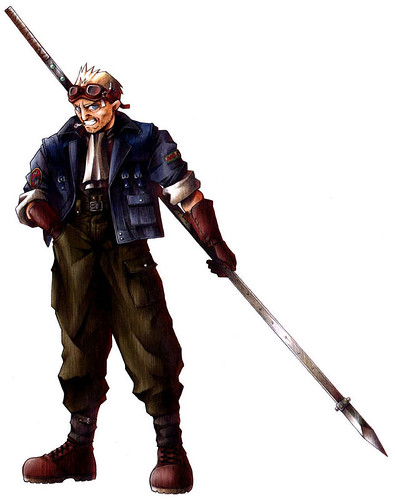
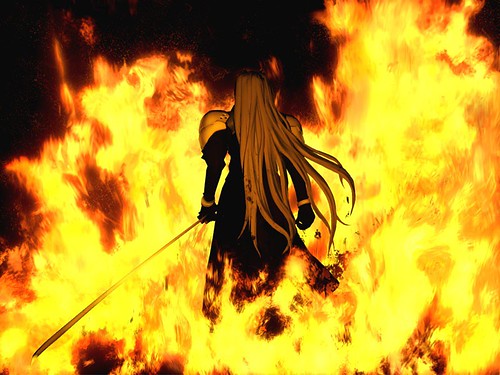
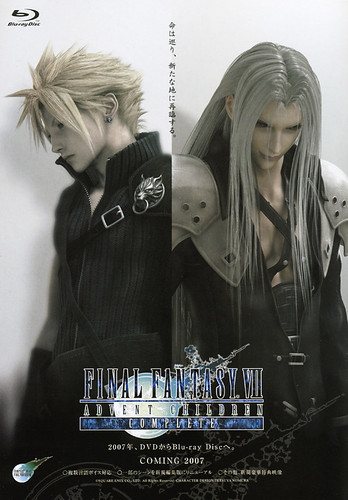
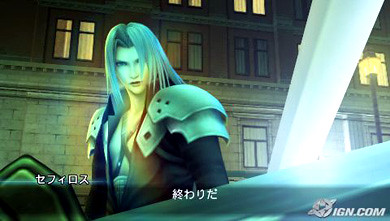
The first FF on the Playstation. The first FF released for PCs. The first FF to feature 3D graphics and fully animated movie clips. Quite probably the best-selling Final Fantasy game ever made. 1997's release of Final Fantasy VII brought the series to vast numbers of people who had never before played it on the Nintendo consoles, and made more die-hard fanatics than any FF before or since. While not the only game in the series to have a related game (X has a direct sequel, and XII has a sequel in production), VII has three spin-off games, two films, and two novellas based on it. It catapulted the silver-haired prettyboy phenomenon into rabid popularity, is prone to some truly terrible translation gaffes, and has caused innumerable other works to suffer by comparison. It features the most popular incarnation of Cid—and the only one that's a main, playable character—the most popular villain, and one of the most popular main characters of any game. Love it or hate it, Final Fantasy VII is a powerful force in the game world, and will remain so for some time.
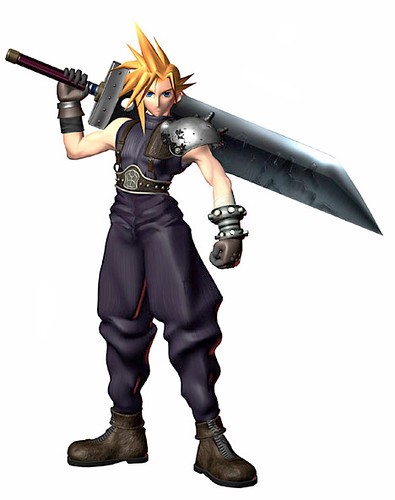
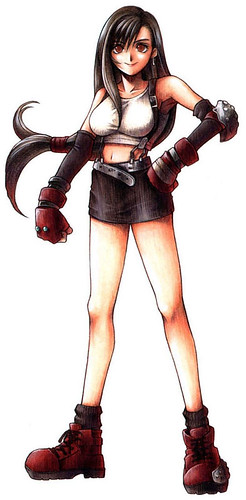
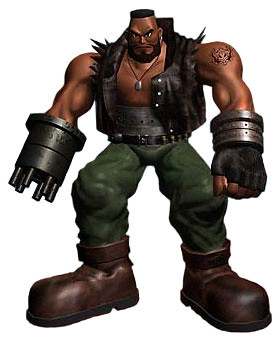
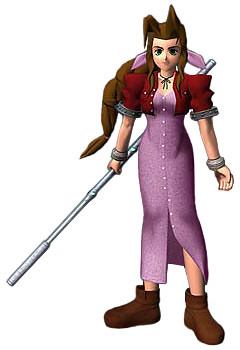
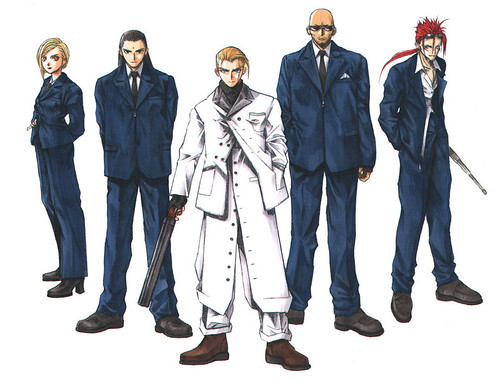
Shinra Power is a monolithic corporation with direct control over the city-state of Midgar, and indirect control over the majority of the world. Mako is the concentrated lifeforce of the planet, and the energy source mined and distributed by Shinra. SOLDIERs are the elite of Shinra's army, created by saturating ordinary people with high concentrations of mako and keeping the ones that survive the process. Cloud Strife is a SOLDIER-turned-mercenary with massive gaps in his memory who joins an eco-terrorist group called AVALANCHE—headed by Barret Wallace—at the request of his childhood friend, Tifa. After planting a bomb that destroys one of the eight mako reactors in Midgar, Cloud meets Aerith (mistranslated in the game as Aeris), an innocent young woman being pursued by the Turks, Shinra's enforcers. Finding out why Shinra wants her is only the beginning, as it seems that Sephiroth—Shinra's leading general, most accomplished SOLDIER, and presumed corpse for the last five years—is alive, insane, and more powerful than ever.
Images:
Cloud
Tifa
Barret
Aerith
Cid
The famous Sephiroth scene
Cloud and Sephiroth on the poster for the movie Advent Children
Sephiroth as seen in Crisis Core
Rufus Shinra and the Turks: Elena, Tseng, Rude, and Reno
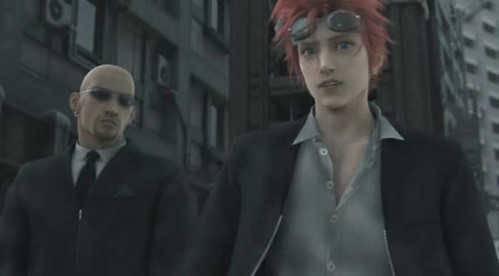
Rude and Reno as they appear in Advent Children
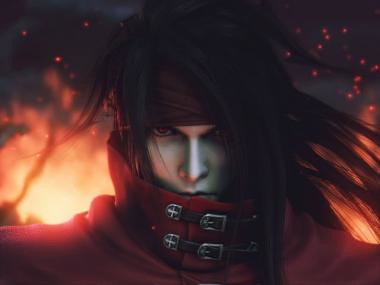
Vincent Valentine in Dirge of Cerberus
The original game intro compared to the tech demo remake for the PS3
Eminence Symphony Orchestra performing Sephiroth's theme song
Shinra Power is a monolithic corporation with direct control over the city-state of Midgar, and indirect control over the majority of the world. Mako is the concentrated lifeforce of the planet, and the energy source mined and distributed by Shinra. SOLDIERs are the elite of Shinra's army, created by saturating ordinary people with high concentrations of mako and keeping the ones that survive the process. Cloud Strife is a SOLDIER-turned-mercenary with massive gaps in his memory who joins an eco-terrorist group called AVALANCHE—headed by Barret Wallace—at the request of his childhood friend, Tifa. After planting a bomb that destroys one of the eight mako reactors in Midgar, Cloud meets Aerith (mistranslated in the game as Aeris), an innocent young woman being pursued by the Turks, Shinra's enforcers. Finding out why Shinra wants her is only the beginning, as it seems that Sephiroth—Shinra's leading general, most accomplished SOLDIER, and presumed corpse for the last five years—is alive, insane, and more powerful than ever.
Images:
Cloud
Tifa
Barret
Aerith
Cid
The famous Sephiroth scene
Cloud and Sephiroth on the poster for the movie Advent Children
Sephiroth as seen in Crisis Core
Rufus Shinra and the Turks: Elena, Tseng, Rude, and Reno
Rude and Reno as they appear in Advent Children
Vincent Valentine in Dirge of Cerberus
The original game intro compared to the tech demo remake for the PS3
Eminence Symphony Orchestra performing Sephiroth's theme song
Monday, October 1, 2007
Final Fantasy VI
1994 saw the release of the last Final Fantasy game for the SNES, although, as with IV, it was misnumbered in the North American release as III. Featuring an intricate story, fully-fleshed characters, the largest playable cast of any numbered FF game to date, the introduction of steampunk to the series, and one of the most memorably evil villains, it's another contender for the best Final Fantasy game.
Terra Branford has grown up as a slave under the control of Emperor Gestahl. Locke Cole is a "treasure hunter" with strong anti-Empire leanings. When Terra breaks free of imperial control and is found by Locke, a chain of events is set in motion that will break apart the world as it is known. Joined by Celes, a general of the Empire who realizes what's going on; Edgar, king of the neighboring country of Figaro; his brother Sabin, an ascetic; Shadow, an assassin with a secret; Cyan, a man who has lost everything to the predations of the Empire; and a small host of others, they try to stop Gestahl and his insane right-hand Kefka from exploiting the Espers—a race of magical people—and conquering the world.
Images:
Icons of the entire playable cast, in order:
Terra, Locke, Edgar, Sabin, Celes, Shadow, Cyan, Mog, Gau, Setzer, Relm, Strago, Umaro, and Gogo
Concept art of Kefka
The self-proclaimed Angel of Death
Intro sequence for the PSX
Opening scenes on the GBA
Terra Branford has grown up as a slave under the control of Emperor Gestahl. Locke Cole is a "treasure hunter" with strong anti-Empire leanings. When Terra breaks free of imperial control and is found by Locke, a chain of events is set in motion that will break apart the world as it is known. Joined by Celes, a general of the Empire who realizes what's going on; Edgar, king of the neighboring country of Figaro; his brother Sabin, an ascetic; Shadow, an assassin with a secret; Cyan, a man who has lost everything to the predations of the Empire; and a small host of others, they try to stop Gestahl and his insane right-hand Kefka from exploiting the Espers—a race of magical people—and conquering the world.
Images:
Icons of the entire playable cast, in order:
Terra, Locke, Edgar, Sabin, Celes, Shadow, Cyan, Mog, Gau, Setzer, Relm, Strago, Umaro, and Gogo
Concept art of Kefka
The self-proclaimed Angel of Death
Intro sequence for the PSX
Opening scenes on the GBA
Thursday, September 27, 2007
Final Fantasy IV
Although fourth in the series, this 1991 offering for the SNES was only the second to be released in North America, and is often still referred to as Final Fantasy II for that reason. It has, like the original game, been remade several times for a number of systems. As the innovator of any number of conventions that would later be used in the series and notable for having the first playable Cid—a character that has appeared in some form in every FF since II—this game is among the top contenders for the highly contested rank of Best Final Fantasy Game Ever.
The story focuses on Cecil, Dark Knight and captain of the Red Wings, the fleet of airships belonging to the country of Baron. After being sent to a peaceful town to steal a Crystal in what amounted to a massacre, Cecil questions his king's motives. Given a vague reassurance, he is sent on a mission to deliver a package to another town. Accompanied by his best friend, Kain—who can't quite disguise his love for Cecil's girlfriend, Rosa—Cecil journeys to Mist, home of the Summoners, only to discover that the package he is carrying is actually a bomb. The entire town is obliterated, leaving a young girl as the sole survivor. The girl, Rydia, summons Titan with the last of her strength, causing an earthquake that changes the landscape and separates Cecil and Kain. Angered by the betrayal and grieved by the destruction he inadvertently caused, Cecil undertakes a quest to redeem himself and stop his former king. Betrayal, redemption, and sacrifice abound as Cecil gathers companions only to lose them again, culminating in an otherworldly showdown with a force of primal hatred and destruction.
Images:
Concept art of Cecil
Concept art of Kain
Concept art of Rosa
Concept art of Cecil, post-redemption
Screenshot of Cecil confronting Baron's king
Cecil and Kain fighting the Mist dragon
Game introduction video for the GBA vs. the SNES
Trailer for the DS remake
The story focuses on Cecil, Dark Knight and captain of the Red Wings, the fleet of airships belonging to the country of Baron. After being sent to a peaceful town to steal a Crystal in what amounted to a massacre, Cecil questions his king's motives. Given a vague reassurance, he is sent on a mission to deliver a package to another town. Accompanied by his best friend, Kain—who can't quite disguise his love for Cecil's girlfriend, Rosa—Cecil journeys to Mist, home of the Summoners, only to discover that the package he is carrying is actually a bomb. The entire town is obliterated, leaving a young girl as the sole survivor. The girl, Rydia, summons Titan with the last of her strength, causing an earthquake that changes the landscape and separates Cecil and Kain. Angered by the betrayal and grieved by the destruction he inadvertently caused, Cecil undertakes a quest to redeem himself and stop his former king. Betrayal, redemption, and sacrifice abound as Cecil gathers companions only to lose them again, culminating in an otherworldly showdown with a force of primal hatred and destruction.
Images:
Concept art of Cecil
Concept art of Kain
Concept art of Rosa
Concept art of Cecil, post-redemption
Screenshot of Cecil confronting Baron's king
Cecil and Kain fighting the Mist dragon
Game introduction video for the GBA vs. the SNES
Trailer for the DS remake
Tuesday, September 25, 2007
Final Fantasy
The beginning of an era. This 1987 game, originally for the Nintendo Entertainment System, has generated a large amount of numbered sequels an un-numbered spinoffs. It's been remade and ported onto at least six different platforms (MSX 2, WonderSwan Color, PlayStation, Game Boy Advance, PSP, and a downloadable verson for some mobile phones), and even has a popular webcomic based on it. A game given a tongue-in-cheek name (it was the Final game they'd make, and a Fantasy RPG) by a dying company, it revitalized Square when it became one of the highest-selling games of all time.
The outline of the game is amazingly simple. You create a party of four characters from six available classes. They are the fabled Light Warriors (or Warriors of Light, depending on the translation), and need to quest for Orbs of the four classic elements (earth, fire, water, and air) to reenergize the corresponding crystal, which will in turn allow them to defeat the power of Chaos which has the world trapped in an eternal time loop. Being as close to a true role playing game as a video game can come there's absolutely no character development beyond your imagination, but in a time dominated by arcade-style games FF was a rarity of complex storytelling.
Images:
A random battle from the original NES
A random battle from Final Fantasy Origins for the PSX
Concept art by Yoshitaka Amano
Intro FMV for the PSX
The outline of the game is amazingly simple. You create a party of four characters from six available classes. They are the fabled Light Warriors (or Warriors of Light, depending on the translation), and need to quest for Orbs of the four classic elements (earth, fire, water, and air) to reenergize the corresponding crystal, which will in turn allow them to defeat the power of Chaos which has the world trapped in an eternal time loop. Being as close to a true role playing game as a video game can come there's absolutely no character development beyond your imagination, but in a time dominated by arcade-style games FF was a rarity of complex storytelling.
Images:
A random battle from the original NES
A random battle from Final Fantasy Origins for the PSX
Concept art by Yoshitaka Amano
Intro FMV for the PSX
Subscribe to:
Posts (Atom)